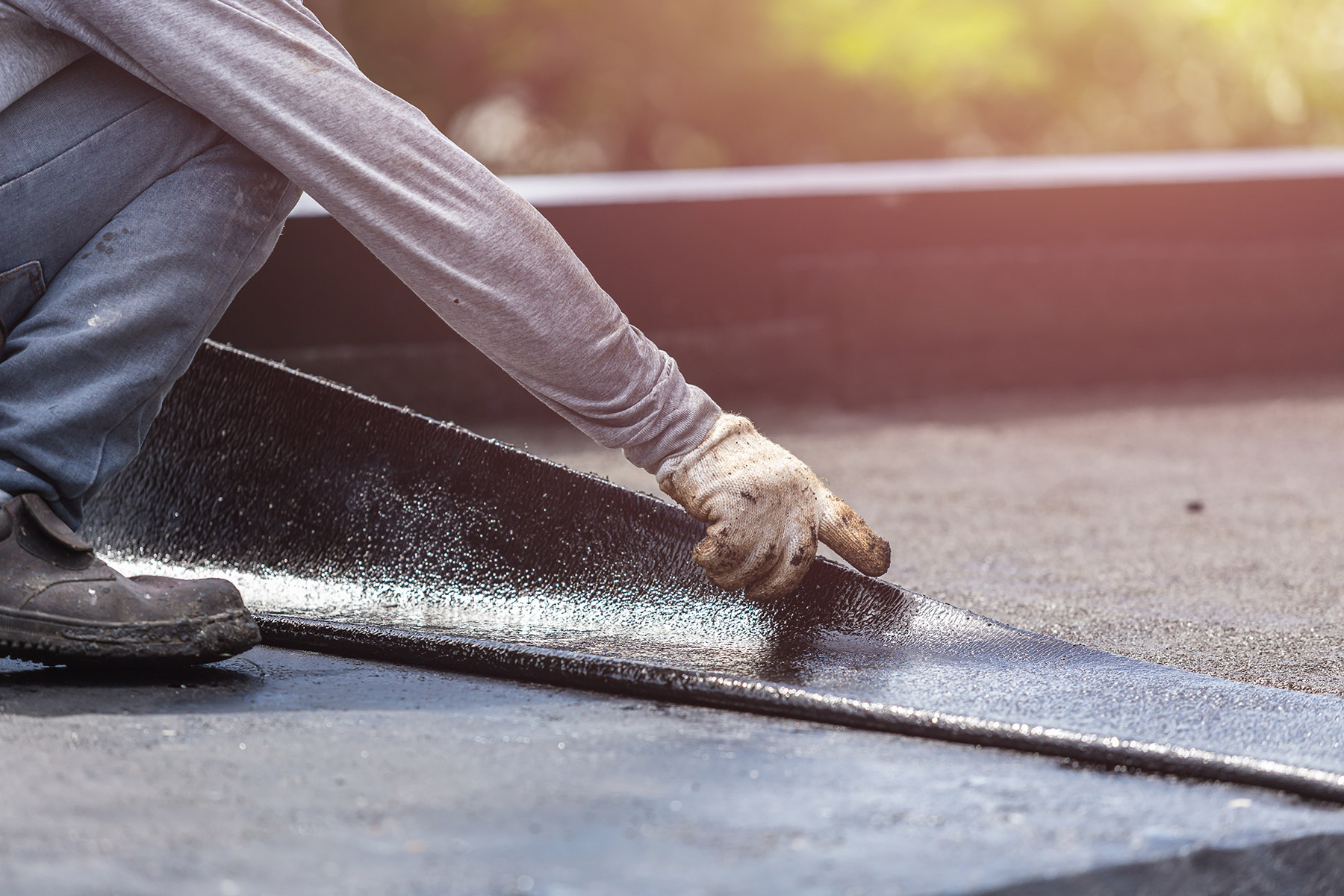
Modified Bitumen SBS and APP Roofing in Akron, OH for Akron commercial properties
Modified bitumen roofing — the evolution of traditional BUR that incorporates factory-manufactured polymer-modified sheets in place of field-mopped felts — is the specification where Akron's climate creates the clearest material chemistry choice: SBS beats APP in northeast Ohio, and the reason is winter. SBS (styrene-butadiene-styrene) modification produces a membrane that maintains elastomeric flexibility at temperatures below freezing — it bends without cracking when a cold snap arrives on a January morning. APP (atactic polypropylene) modification produces a harder, more plastic-like sheet that offers excellent UV resistance and high-temperature stability but becomes stiff and brittle in sustained cold. In a climate that averages 13.4 inches of snow in January and regularly sees nighttime lows in the single digits, SBS is the responsible commercial roofing specification and APP should be reserved for applications where it offers a genuine advantage.
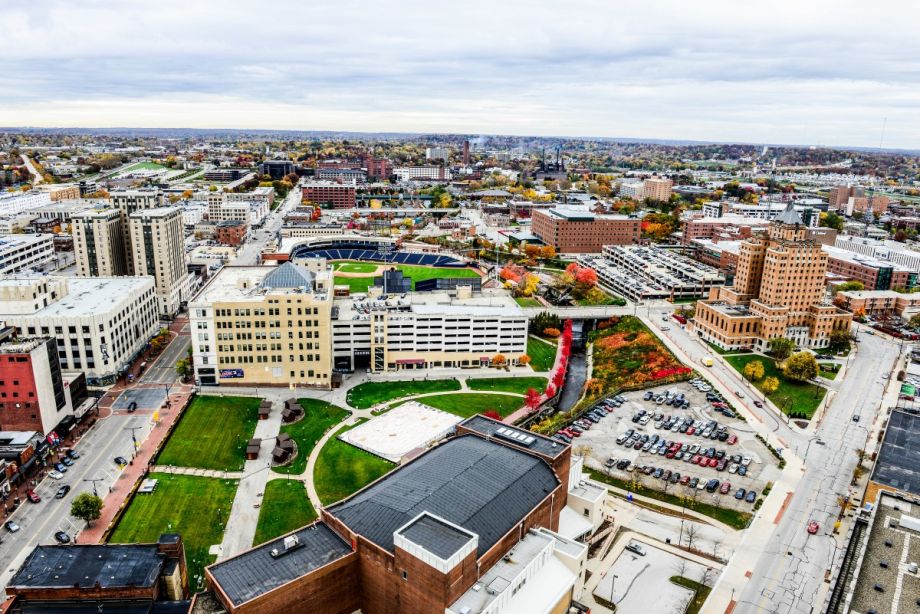
Akron's downtown commercial and industrial building stock — the converted industrial spaces along the Bowery, the commercial buildings throughout the Main-Market Historic District, and the older commercial inventory along Kenmore Boulevard — has a substantial modified-bitumen installed base that accumulated through the 1980s, 1990s, and 2000s as building owners reroofed their BUR systems with mod-bit recovery systems. Many of these mod-bit installations are now 20 to 30 years old, in the range where the top surface granule embedment has depleted, the SBS modifier has begun to oxidize and lose elasticity, and the laps are showing adhesion fatigue from decades of thermal cycling. This is the condition that generates the most active roofing work in Akron's older commercial neighborhoods — not catastrophic failure but progressive degradation that has crossed from maintainable to replacement-warranted.
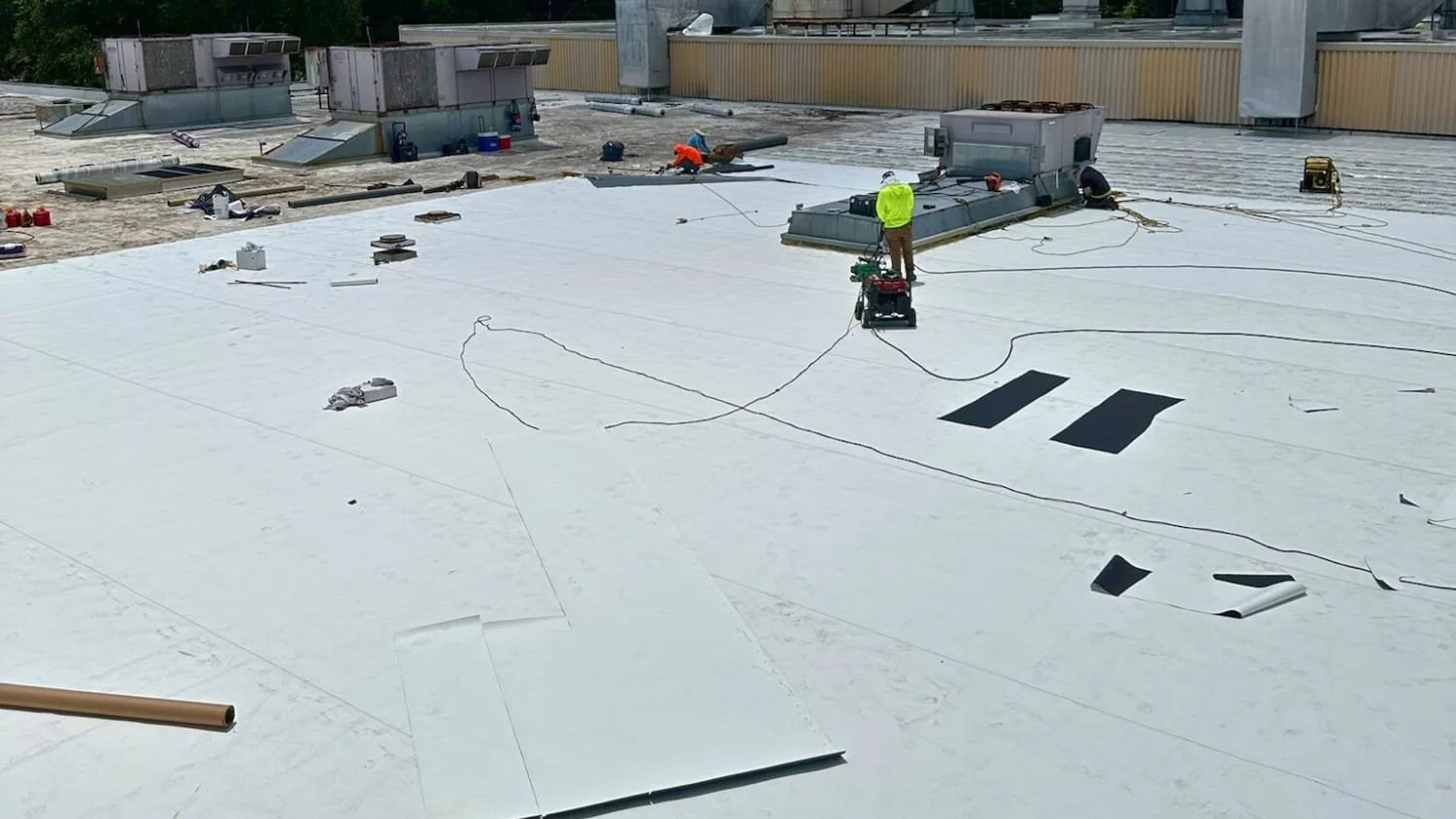
Torch application safety near occupied campus buildings is a critical operational constraint that mod-bit work shares with no other roofing system. Torch-applied SBS cap sheet installation uses an open propane flame to fuse the factory-applied adhesive layer of the sheet to the substrate. On unoccupied industrial buildings, this is a straightforward process. On or adjacent to occupied buildings — the University of Akron academic complex, the Summa Health campus, Akron Children's Hospital, or any occupied commercial building — torch application creates fire safety, smoke intrusion, and odor concerns that must be systematically managed. We follow NRCA guidelines for torch-applied systems in occupied occupancies: fire watch during and 30 minutes after torch application, continuous monitoring of interior spaces for smoke penetration, hot-work permits where required by facility operations, and the use of cold-process SBS adhesive or induction-bonded systems in areas adjacent to occupied interior spaces where torch work is prohibited.
Self-adhered SBS systems — where the modified bitumen sheet has a factory-applied pressure-sensitive adhesive that activates by removing a release liner and pressing the sheet to the substrate — are the preferred alternative to torch-applied systems in temperature-sensitive or fire-restricted environments. Self-adhered cap sheet systems have improved substantially in adhesive quality and bond strength over the past decade, and the best current products provide performance approaching torch-applied seam quality in the temperature range above 40°F. Below 40°F, self-adhered adhesives lose tack rapidly and require warming before application is reliable — which creates a practical application season limitation in Akron that is similar to, but slightly more restrictive than, torch-applied systems. Both approaches require substrate temperatures above 40°F for reliable adhesive bonding.
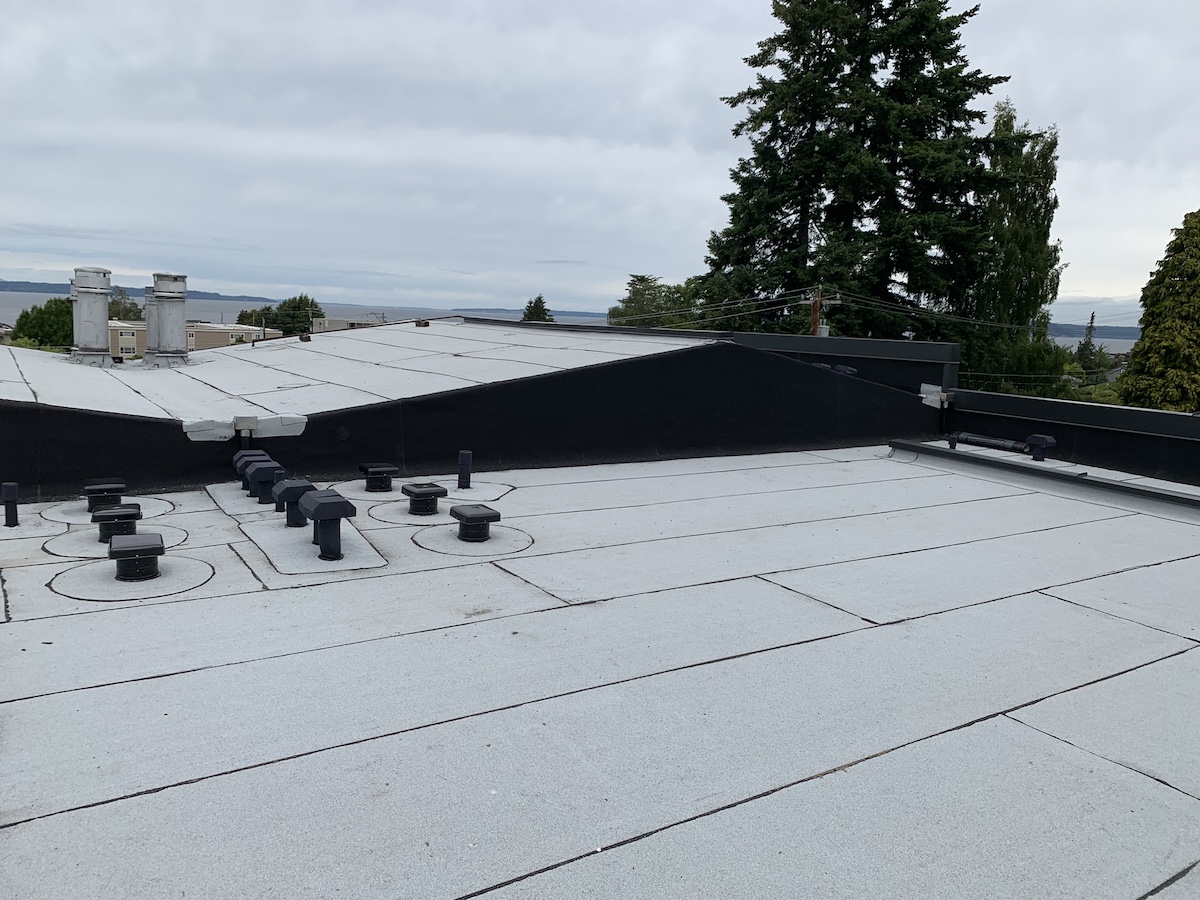
Two-ply modified bitumen systems — a base sheet plus a granule-surfaced cap sheet — are the standard specification for new modified bitumen installations in Summit County. The base sheet serves as the primary waterproofing layer and the cap sheet provides UV protection, granule surface for traffic, and the granule-embedded color that provides modest reflectivity. For Akron's climate, we specify SBS base and SBS cap, fully adhered to polyiso insulation and coverboard, with all laps heat-fused in the torch-applied system or self-adhered in restricted-access applications. This assembly carries 15-year manufacturer warranties from major modified bitumen manufacturers and provides the cold-temperature performance that Akron's winters require.
Modified bitumen's compatibility with existing BUR substrates makes it the natural recover specification for Akron's older BUR buildings. When a BUR system has been assessed and found to have dry insulation and a sound substrate, an SBS modified bitumen recover over the cleaned and primed BUR cap sheet adds a waterproofing generation without the cost and disruption of a full tear-off. This approach has been applied to hundreds of buildings in Akron's older commercial neighborhoods and, when executed correctly with a pre-recover moisture scan confirmation, provides excellent results at 40–60% of the cost of a full replacement. The key execution discipline is the moisture scan — recover over wet BUR insulation is a failure waiting to happen.
Modified bitumen's repairability in the field is one of its practical advantages. Localized failures — split seams, open laps, flashingbreach points — are repairable with torch-applied patches that fuse to the existing membrane surface when the surface is properly prepared. These repairs, executed by trained crews with appropriate equipment, produce durable closures that integrate with the existing membrane rather than simply covering damage with a mastic coating. The quality of a torch-applied SBS repair is fundamentally different from a cold-applied mastic patch — the repair mechanic is fusion rather than adhesion, and fusion provides permanent bonding that survives thermal cycling where adhesive bond patches often do not.
The long-term maintenance program for an SBS modified bitumen roof in Akron centers on three activities: twice-annual drain clearing to prevent ponding that accelerates surface oxidation, periodic granule condition monitoring (granule loss exposes the bitumen surface to UV degradation at an accelerating rate), and seam inspection with targeted seam seal on any open lap identified during inspection. Buildings with documented history of seasonal freeze-thaw seam opening — common on the older Kenmore and downtown commercial buildings where significant seasonal temperature swings accumulate over decades — benefit from a fall seam inspection and sealing program that addresses marginal laps before the winter freeze cycle works them open.
Questions Owners Ask
Why is SBS specifically better than APP for Akron's climate?
SBS (styrene-butadiene-styrene) modified bitumen retains elastomeric flexibility at sub-freezing temperatures because the SBS polymer modifier behaves like synthetic rubber at cold temperatures — it bends and stretches without cracking. APP (atactic polypropylene) modifier behaves more like a plastic — it is harder and stronger at warm temperatures but becomes stiff and brittle in sustained cold. In Akron's January and February temperature range, an APP cap sheet can crack at seams and laps during rapid cold-weather movements that an SBS cap sheet handles without distress. SBS is the correct cold-climate specification.
Can torch-applied mod-bit be used on a building that has a fire sprinkler system?
Yes — a functioning fire sprinkler system is actually a safety benefit for torch-applied mod-bit work, providing an additional fire suppression layer if a fire-watch failure occurs. The relevant constraint is odor and smoke intrusion to occupied spaces below the roof. We evaluate each building's HVAC air intake configuration relative to torch-work areas and establish no-torch zones around intakes that could draw combustion smoke into occupied spaces. Hot-work permits, required by some facility operations departments including major hospital campuses, formalize this analysis and establish the fire watch and monitoring protocol.
How long does a two-ply SBS mod-bit system last in northeast Ohio?
A properly installed two-ply SBS modified bitumen system with fully adhered cap sheet carries a 15-year manufacturer warranty in standard configurations, and real-world service life in northeast Ohio's climate commonly extends to 20+ years with regular maintenance. The most common mid-life maintenance item is granule loss from high-traffic areas and drain ponding zones, which can be addressed with partial cap sheet replacement or a silicone coating application over depleted surface areas. Full replacement is typically driven by lap seam fatigue accumulation across the system rather than field membrane failure.
My mod-bit roof has bubbles or blisters in the field area. What causes that?
Blistering in modified bitumen — dome-shaped bubbles in the field membrane between attachment points — is caused by moisture vapor pressure beneath the membrane expanding during warm weather. The moisture source is usually insulation or substrate moisture that was trapped during installation, or moisture that infiltrated through a previous seam or flashing failure. Blisters that are stable (not growing and not leaking) can often be managed without immediate intervention. Blisters that are growing, that show wrinkles at the edges, or that are leaking need to be cut open, the underlying moisture source addressed, and the blister area repaired. We assess blister conditions as part of routine inspection and provide specific recommendations based on blister stability, size, and location.
Is modified bitumen a good roofing choice for a Kenmore Boulevard commercial building being renovated for retail use?
Yes — two-ply SBS modified bitumen is an excellent specification for the older masonry commercial buildings that characterize the Kenmore Boulevard Historic District. Its compatibility with masonry substrates, its ability to be installed as a recover over existing BUR, its long track record in northeast Ohio's climate, and its repairability over a multi-decade service life make it well-suited to the building type. For a retail conversion specifically, we would specify a white or light-colored granule cap sheet to provide modest reflectivity consistent with the building's new commercial use, and ensure all rooftop drains and scuppers are upgraded to handle the building's new occupancy drainage loads.