Acrylic and Silicone Roof Coatings in Akron, OH for Akron commercial properties
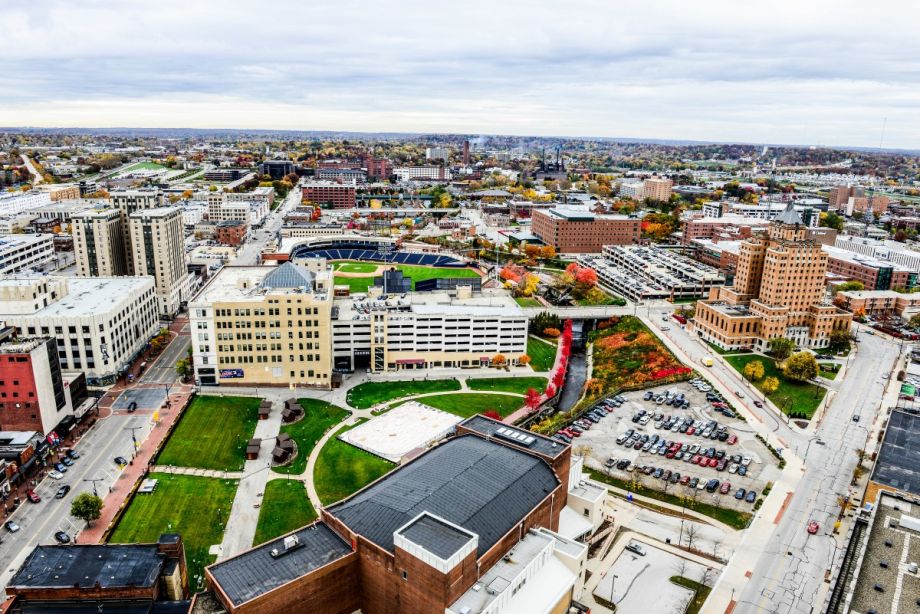
Akron's flat-roof commercial buildings face a challenge that most of the country's roofing markets never have to solve at scale: 47.2 inches of annual snowfall landing on low-slope membranes that were engineered for water runoff, not weeks-long standing melt. When that snow consolidates and temperatures oscillate across the freezing mark — as they do repeatedly between November and March — standing water becomes the default condition on thousands of rooftops from Goodyear Heights to the Fairlawn-Bath retail corridor. Silicone roof coatings were developed specifically for this problem. Unlike acrylic, silicone does not re-emulsify in standing water, meaning it retains adhesion, flexibility, and reflectivity through extended ponding without blistering, softening, or losing film integrity.
For Akron's polymer and rubber manufacturing legacy, the coating conversation carries a certain institutional familiarity. The University of Akron's School of Polymer Science and Engineering — one of the world's premier polymer research programs — is a few miles from buildings whose original BUR and modified-bitumen systems were installed when Goodyear and Firestone still occupied their namesake neighborhoods. Those aging substrates often have surface oxidation and minor cracking that makes them excellent candidates for a silicone overcoat rather than a costly full replacement. A properly applied silicone system at 20–25 mils DFT (dry film thickness) can add a warranted 10-year service life to an existing membrane, bridging small cracks, restoring reflectivity, and eliminating the landfill cost of a tear-off.
Acrylic coatings remain relevant on Akron rooftops where ponding is not a factor — sloped metal or steep mod-bit surfaces on suburban office parks along Arlington Road, Copley Road, or the Montrose-Ghent commercial corridor, for example. Acrylic formulations have advanced significantly: modern elastomeric acrylics offer strong UV resistance, excellent color retention, and vapor permeability that helps moisture-laden assemblies dry out. The decisive factor in the silicone-vs.-acrylic decision for any Akron building is whether water drains within 48 hours of a storm event. Given Akron's precipitation volume — 41.57 inches of annual rain on top of that snowfall — most commercial flat roofs cannot reliably meet that benchmark, which pushes the recommendation toward silicone.
Akron Children's Hospital and the Summa Health Akron campus present specific coating application constraints. Both medical complexes operate continuously, meaning rooftop access must be coordinated around HVAC equipment, medical gas exhaust, and areas where solvent odors could penetrate to sensitive patient-care environments. Silicone coatings are applied via spray, roller, or squeegee; their low-VOC formulations and lack of open-flame requirement make them compatible with occupied-building work in a way that torch-applied systems never can be. Scheduling coating work on these campuses requires close coordination with facilities managers, and our crews are accustomed to that communication cadence.
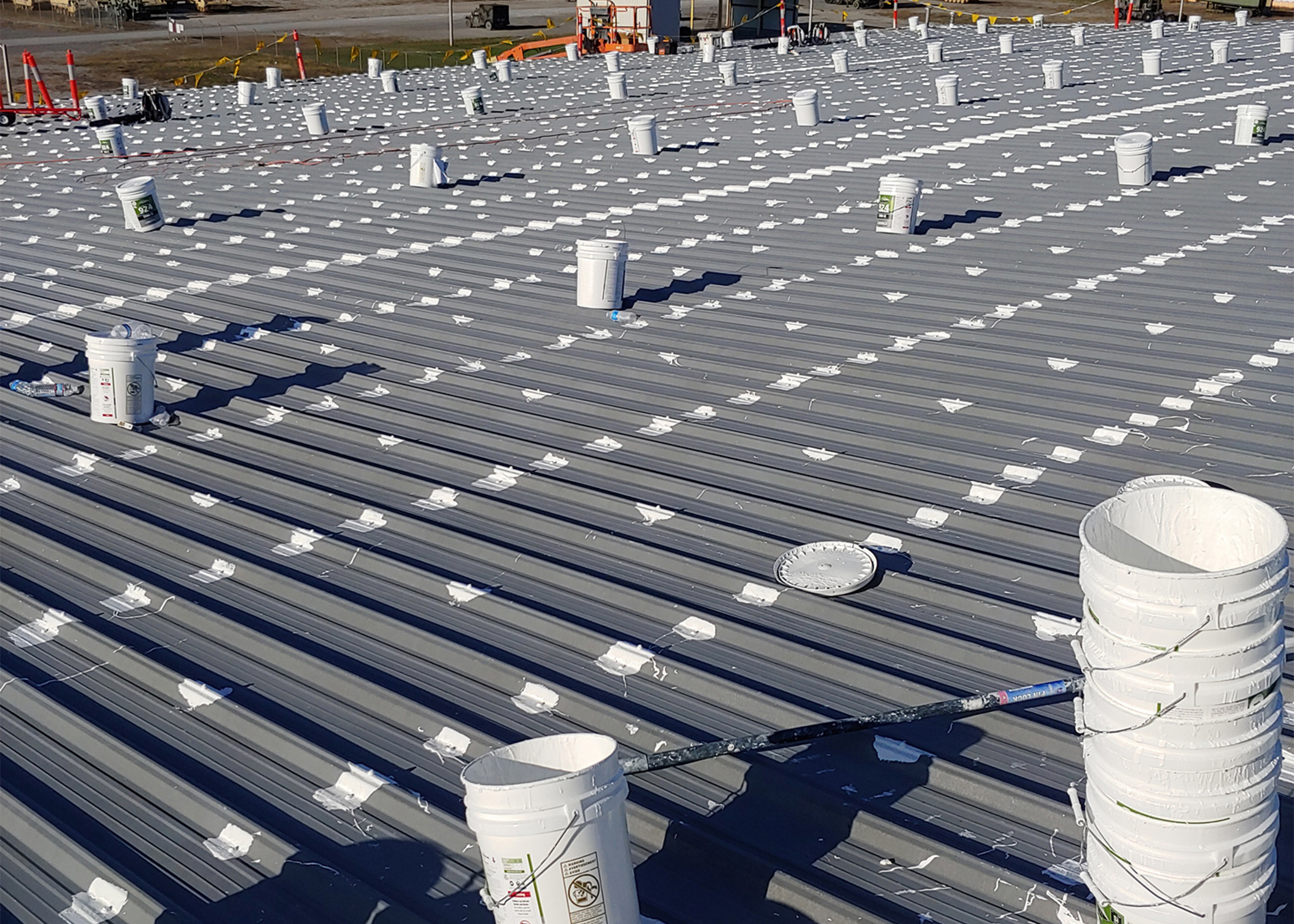
Application timing in northeast Ohio is tighter than in markets with moderate winters. Silicone coating requires substrate temperatures above 40°F and rising, humidity below 85%, and no precipitation forecast within the cure window — typically four to six hours for traffic and 24–48 hours for full cure. That narrows the reliable application season to April through October, with May, June, and September being the most consistent windows in Akron. Fall application has the advantage of getting a fresh reflective surface on the roof before the winter load season begins; spring application addresses damage that accumulated over the freeze-thaw cycle. We offer both scheduling windows and carry moisture meters and infrared thermometers to confirm substrate readiness before opening a drum.
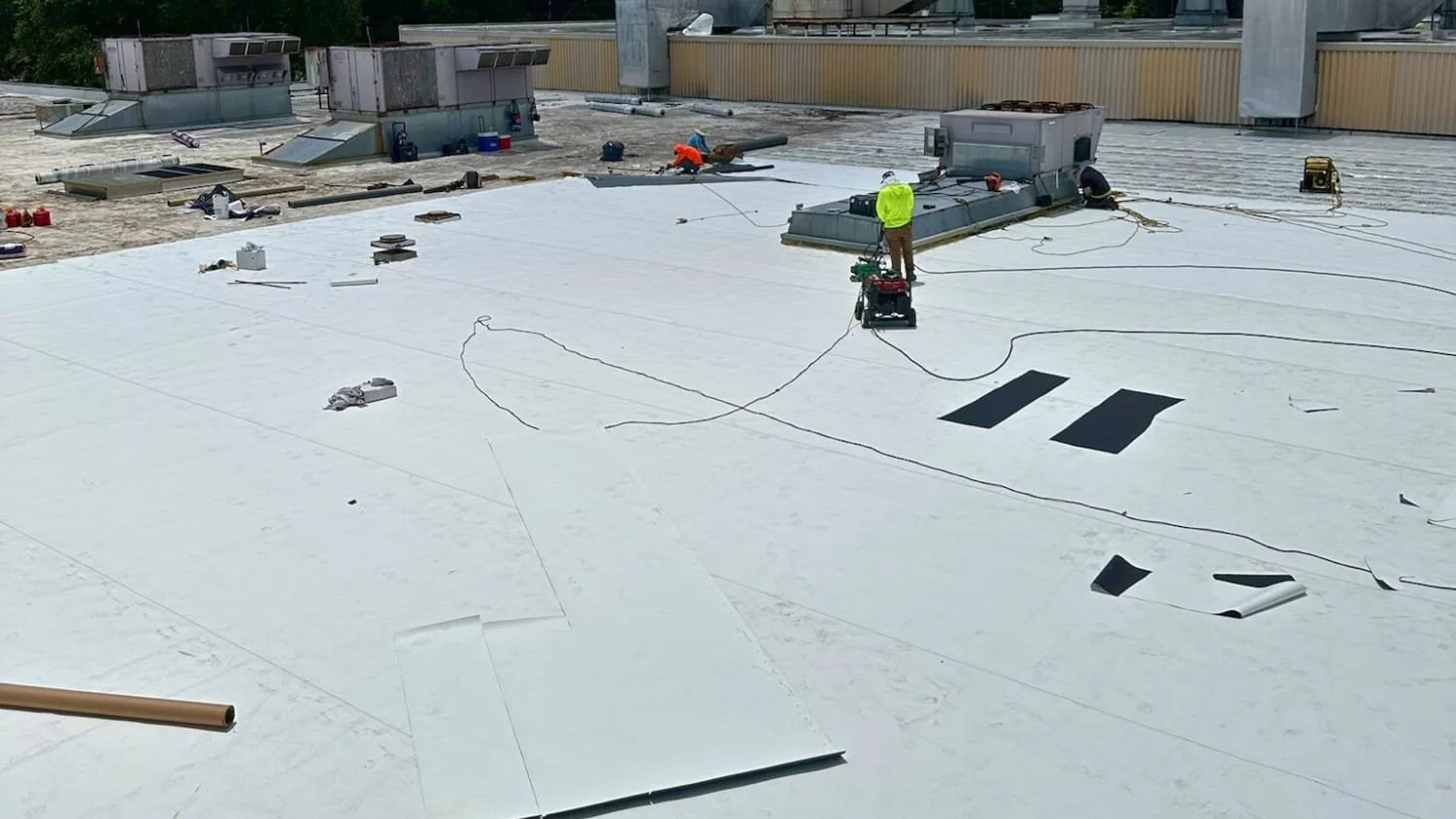
Building owners along the Port Green Industrial Park and the CAK airport-area commercial corridor often ask about coating over an existing EPDM or TPO membrane. Both are viable substrates for silicone when properly cleaned and primed. EPDM in particular — common in Akron because of the region's historical connection to rubber chemistry — benefits from a silicone overcoat when seams have begun to peel but the field membrane is still sound. The critical step is a core sample and moisture scan before committing to a coating approach; wet insulation underneath a membrane cannot dry out through a silicone topcoat and will eventually cause blistering regardless of how well the coating itself performs.
Reflectivity is an honest but measured part of the coating value proposition for Akron. With a July average high of 73.9°F, Akron is not Phoenix — cooling savings from a white silicone coating are real but more modest than they would be in a warmer climate. The stronger financial case for reflective coatings in this market is thermal cycling reduction: the daily and seasonal temperature swings across Akron's membrane surfaces are significantly more extreme than the average ambient temperature suggests. A dark membrane on a clear January day can swing from 0°F to 60°F as sunlight hits it and then back toward freezing at dusk. A reflective coating flattens that curve, reducing the expansion-contraction stress that ultimately cracks laps and opens seams.
Warranties for coating systems in Ohio typically run 10 years for contractor-installed silicone at proper thickness, with manufacturer options extending to 15 or 20 years on qualifying substrates. FirstEnergy/Ohio Edison commercial customers may have access to demand-response incentives for reflective roof upgrades as part of energy efficiency programs — our team can provide the documentation needed to support those applications. For building owners considering a coating system as part of a broader capital improvement plan for a Summit County property, we provide detailed condition reports that support financing and insurance renewal conversations.
The first step is always a no-obligation roof assessment that includes an infrared moisture scan, surface condition evaluation, and drainage analysis. From that, we produce a written recommendation specifying coating type, application rate, primer requirements, and projected service life — giving you a clear comparison against the cost of a partial or full replacement. Akron's polymer heritage gives this city a sophisticated baseline understanding of material chemistry; we're happy to match that level of detail in our recommendations.
Questions Owners Ask
Can silicone coating be applied directly over an existing gravel-surfaced BUR?
Not directly — loose gravel must be swept and broomed to expose the cap sheet, and any significant delamination or wet areas must be cut out and patched before coating. Once the surface is clean and stable, a base coat can be applied to lock residual aggregate, followed by the full silicone system. This is common on older Goodyear Heights and Kenmore Boulevard industrial buildings where gravel BUR is the original system.
How long does a silicone coating last in northeast Ohio's climate?
A properly applied silicone coating at 20–25 mils DFT carries a 10-year manufacturer warranty on qualified substrates, and real-world performance in northeast Ohio climates typically tracks that expectation. UV resistance in this latitude is strong, and silicone's flexibility handles Akron's freeze-thaw cycling better than acrylic. Re-coat at end of life is straightforward — silicone bonds to silicone without a primer, so the second cycle is faster and less expensive.
Will a coating stop an active leak?
A coating is not an emergency repair product. Active leaks need to be identified and repaired at the source — flashing failures, open seams, or damaged field membrane — before any coating is applied. Coating over an active leak traps moisture in the assembly and accelerates insulation degradation. We always conduct a full inspection and address all deficiencies before recommending a coating system.
What's the difference in cost between coating and full replacement for a typical Akron flat-roof building?
A silicone coating system typically runs 25–40% of the cost of a full tear-off and replacement for a comparable-sized building, making it compelling when the existing membrane and insulation are still structurally sound. The break-even calculation depends heavily on insulation condition — if a moisture scan reveals significant wet insulation, replacement may be more economical long-term because wet insulation cannot dry out under a coating.
Do coatings qualify for commercial building energy incentive programs in Ohio?
Ohio does not currently have a state-level coating-specific rebate, but FirstEnergy and Ohio Edison offer commercial energy efficiency programs that may apply to reflective roof installations as part of a broader upgrade package. Federal Section 179D deductions may also apply for energy-efficient commercial building improvements. We provide the reflectivity and thermal documentation needed to support those applications.