
Insurance Claim Documentation in Akron, OH for Akron commercial properties
Summit County's commercial roofing insurance landscape is rooted in a convergence of storm patterns that most Ohio markets don't face at the same intensity. Hail from northeast Ohio's severe thunderstorm season arrives in May and June; straight-line wind events and occasional derechos follow in summer; early-fall windstorms bring down equipment and debris before winter; and then January and February deliver the snow loading and ice dam events that characterize the plateau between what storm-damage claims and what wear-and-tear claims look like in this market. For a commercial building owner in Akron, navigating the insurance claim process after any of these events requires documentation that is specific, timely, and formatted to the standards that Summit County's commercial carriers and their adjusters have come to expect.
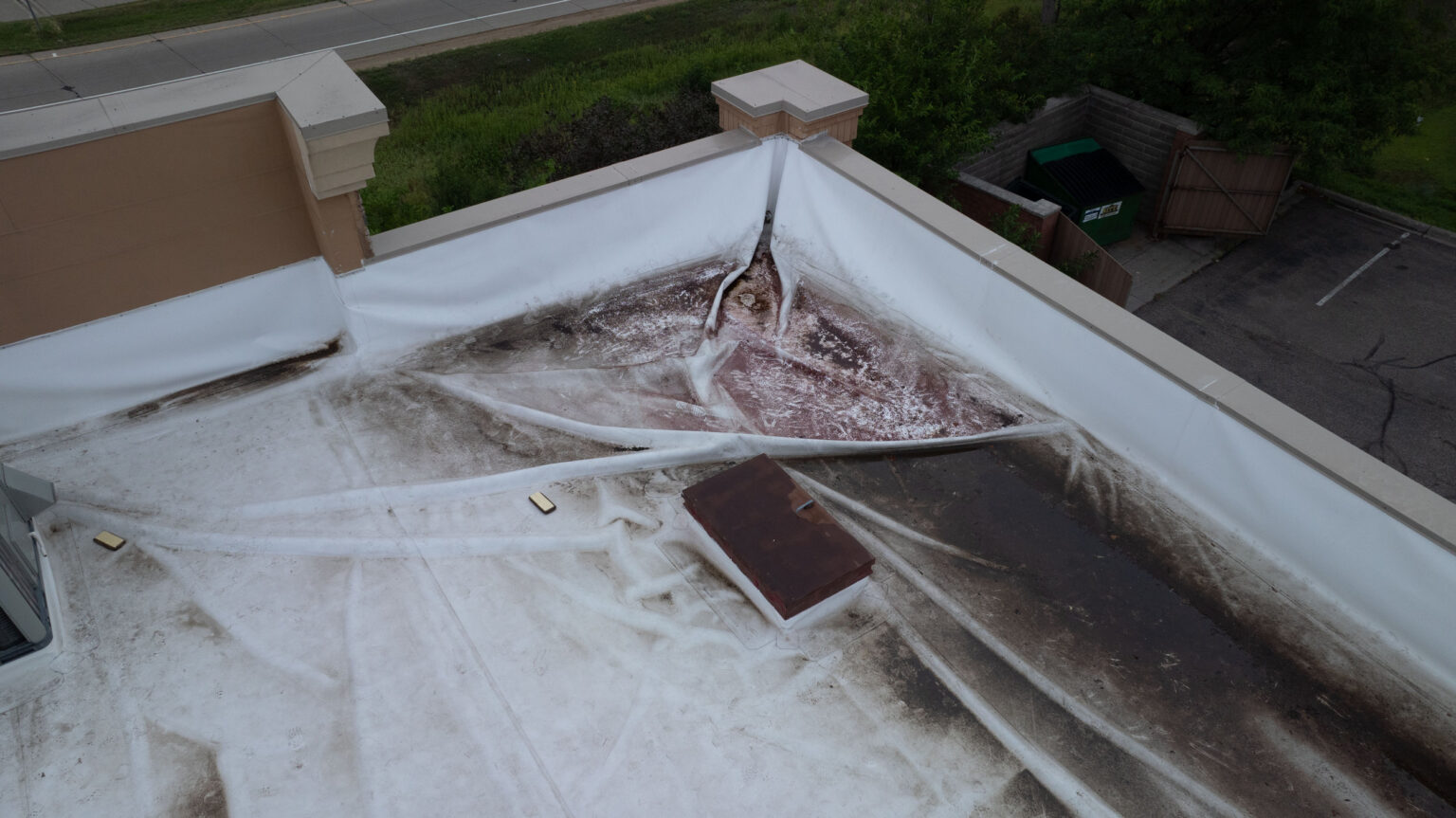
The most damaging mistake commercial property owners make in storm damage claims is delay. Ohio's property insurance policies contain specific notice requirements, and beyond the contractual deadline, the practical problem is evidence degradation. Hail impact marks on membrane surfaces become harder to distinguish from general weathering within 60 to 90 days of the event. HVAC unit dent patterns that establish hail size — the clearest evidence of hail caliber for membrane damage claims — can be difficult to attribute to a specific storm event if the building was hit by multiple events in a season. Water intrusion that began at a storm-created breach accumulates interior damage that obscures the original cause. We advocate for immediate post-storm inspection and documentation, starting the evidence chain on the day after the event when possible.
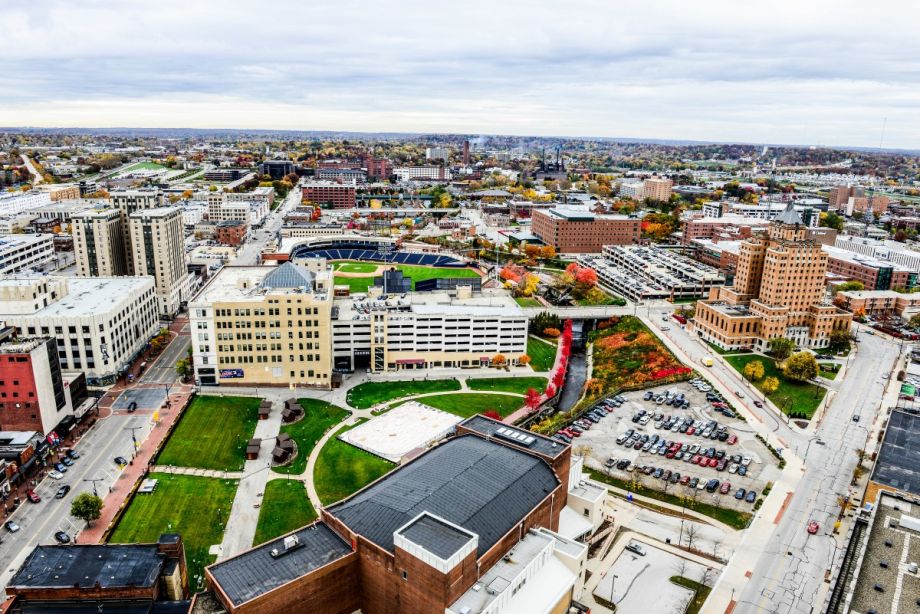
Bounce Innovation Hub and the University of Akron's commercial facilities represent a specific category of claim complexity: institutional buildings with multiple funding streams, procurement requirements, and reporting obligations. A storm damage claim on a UA building involves the insurance carrier as well as potentially facilities capital planning, deferred maintenance accounts, and state facility reporting requirements. The documentation package we provide for institutional clients includes repair scope breakdowns that separate insurance-covered storm damage from pre-existing conditions, supporting the institution's obligation to accurately characterize the claim to its insurer and to its own governance structure. We have worked with UA facilities management and Bounce Innovation Hub on claim documentation for prior storm events and understand the institutional documentation requirements that general contractors often don't anticipate.
Summa Health and Akron Children's Hospital face a different documentation challenge: the claim process for a healthcare facility must be handled in a way that does not interrupt care operations, does not create liability exposure around patient safety during inspection activities, and produces documentation that meets the facility's own internal risk management standards. Our inspection teams on healthcare campuses follow the same infection control and access protocols we use for repair work — meaning the documentation process does not introduce any risks that the facilities management team would need to manage separately. We provide health system facilities teams with inspection findings in their preferred format, whether that is a digital report with GPS-located photographs or a format compatible with their CMMS (computerized maintenance management system).
Cumulative multi-storm damage assessment is one of the most technically demanding aspects of commercial roofing insurance work in Summit County. When a building is impacted by three separate storm events in a single season — as is common in northeast Ohio's active severe weather years — the damage from each event must be assessed, documented, and attributed correctly. Insurance carriers are alert to claims that attempt to package gradual wear-and-tear as storm damage, and a claim that conflates multiple events or includes pre-existing conditions as storm damage is likely to be challenged, denied, or referred for a coverage dispute. Conversely, a legitimate cumulative multi-event claim with clear event-by-event documentation is defensible and routinely succeeds. The key is a running inspection log: post-event inspections conducted promptly after each storm, with clear documentation of the condition immediately after each event.
The specific documentation elements that Summit County commercial insurance carriers and their adjusters look for include: contractor license number and insurance certificate, date and time of inspection relative to the storm event, precise measurement of damaged areas (square footage of impacted field membrane, linear footage of damaged flashing), hail size evidence from HVAC equipment and surface dent pattern analysis, wind speed correlation from regional weather data, photographic documentation with GPS coordinates and timestamps, and a repair scope and cost estimate from the licensed contractor. We provide all of these elements as standard components of our storm damage inspection reports.
Public adjusters can be useful allies in complex commercial claims, and we work cooperatively with public adjusters retained by building owners who want representation in the claims process. We provide our technical inspection reports directly to the public adjuster and are available to discuss findings with the public adjuster, the carrier's adjuster, or both together on-site at re-inspection. Our role is to provide accurate, defensible technical documentation — not to advocate for a particular settlement number, which is the public adjuster's function. The combination of precise technical documentation from the contractor and skilled negotiation from a public adjuster produces the strongest outcomes in complex commercial claims.
For an overview of the full claim-support process, including how we frame a complete repair scope and what to do if a settlement is denied or underpaid, see our Commercial Roof Insurance Claim Assistance page. We also maintain peril-specific claim documentation guides for hail damage claims, wind and storm damage claims, and snow and ice damage claims.
Building owners who are not currently enrolled in a regular inspection program are at a documentation disadvantage when a storm claim arises. Proving storm-caused damage is most straightforward when you have a documented pre-storm inspection record showing the roof was in sound condition before the event. Without that baseline, the claim becomes an argument about whether observed damage pre-dated the storm — an argument that tends to favor the carrier. Our twice-annual inspection program creates the inspection record that makes post-storm claims straightforward: a dated pre-storm inspection showing sound condition, a post-storm inspection documenting the damage, and a clear correlation to the specific weather event from regional meteorological data.
Questions Owners Ask
How long after a storm do I have to file a commercial roof damage claim in Ohio?
Ohio law provides a one-year statute of limitations on property insurance claims, but your specific policy's notice requirements may be shorter — typically 30 to 60 days for timely notice of a loss. More practically, the quality of storm damage evidence degrades significantly within 60 to 90 days of the event, particularly for hail damage. We recommend filing notice with your carrier within two weeks of any significant storm event and having a professional inspection conducted within days of the event. Notice and inspection are two separate steps — file notice promptly, then conduct the thorough inspection.
What if the insurance adjuster's settlement offer is less than the repair cost?
A settlement below the actual repair cost can be appealed through a supplemental claim process. Supplemental claims are supported by a revised contractor estimate that documents scope items not included in the original adjuster assessment, supported by the technical inspection report from the contractor. Most policies also include an appraisal or arbitration provision for unresolved disagreements over loss amount. We provide the technical documentation to support supplemental claims and can participate in re-inspection meetings with the carrier's adjuster to discuss specific scope line items.
My roof has been patched multiple times. Will old repairs affect my storm damage claim?
Prior repairs are part of the roof's history, not a bar to a new storm damage claim. The relevant question is whether the damage documented in the current claim was caused by the current storm event rather than by pre-existing conditions. A pre-storm inspection record showing the roof was in functional condition before the event — even with documented prior repairs — supports the claim that new storm-caused damage is a covered loss. Areas of documented prior damage are typically excluded from a new claim unless the current event caused additional damage to those areas.
Can you document damage to HVAC equipment and other rooftop systems as part of a roofing claim?
Yes — rooftop HVAC unit housings, condenser coils, exhaust fans, and other equipment are typically covered under the building's commercial property policy and can be included in the same storm damage claim as the roof membrane. In fact, HVAC unit dent documentation is often the strongest evidence of hail caliber in a membrane damage claim, since sheet metal denting is more visually definitive than membrane impact marks. We photograph and measure HVAC equipment damage as part of all post-storm inspections and include this documentation in our standard claim support package.
Do you work with all insurance carriers, or only specific ones?
We work with all commercial property carriers active in the Summit County market — we are not exclusive to any carrier, restoration network, or TPO (third-party organization). Our documentation is formatted to be usable with any carrier's claim process. We have experience with the specific documentation requirements of the major commercial carriers serving Akron's market, including carriers that have specific format preferences for cost estimates, photograph organization, and measurement documentation.