Commercial Roof Replacement in Akron for Akron commercial properties
The replacement plan explains tear-off or recover assumptions, insulation and drainage needs, occupied-building phasing, system options, and closeout requirements. Full roof tear-off and replacement is the most capital-intensive roofing decision a commercial building owner makes, and in Akron's climate, the trigger for that decision is most often one specific finding: widespread wet insulation. The sequence is familiar to anyone who manages older commercial buildings in Summit County. A roof that has been serviceable for decades — repaired periodically, drains maintained, flashings touched up — reaches a point where the insulation beneath the membrane has absorbed enough moisture over enough years that no surface repair or recover can address the underlying problem. The insulation is wet, the deck may be showing corrosion from sustained moisture contact, and the R-value has declined to the point where heating and cooling costs for the building are meaningfully elevated. At that point, a tear-off is not just the most appropriate technical response — it is often the most economical long-term decision.
Akron's 47.2 inches of annual snowfall and 41.57 inches of annual rainfall provide the moisture loading that drives wet insulation conditions in this market more aggressively than most Ohio markets. Every winter season represents a sustained test of every membrane seam, penetration flashing, and drain connection in the building's roofing system. Buildings that entered winter with marginal conditions — adhesive seams with reduced bond strength, partially compressed drain boot flashings, hairline cracks in modified bitumen laps — exit spring with those conditions advanced by the freeze-thaw cycling, snowmelt ponding, and ice backup events that characterize the January-March period. After years of this annual stress cycle, the cumulative moisture infiltration often exceeds what cut-and-patch repair or recover can address, and a full tear-off provides the opportunity to inspect and address the complete assembly from deck up.
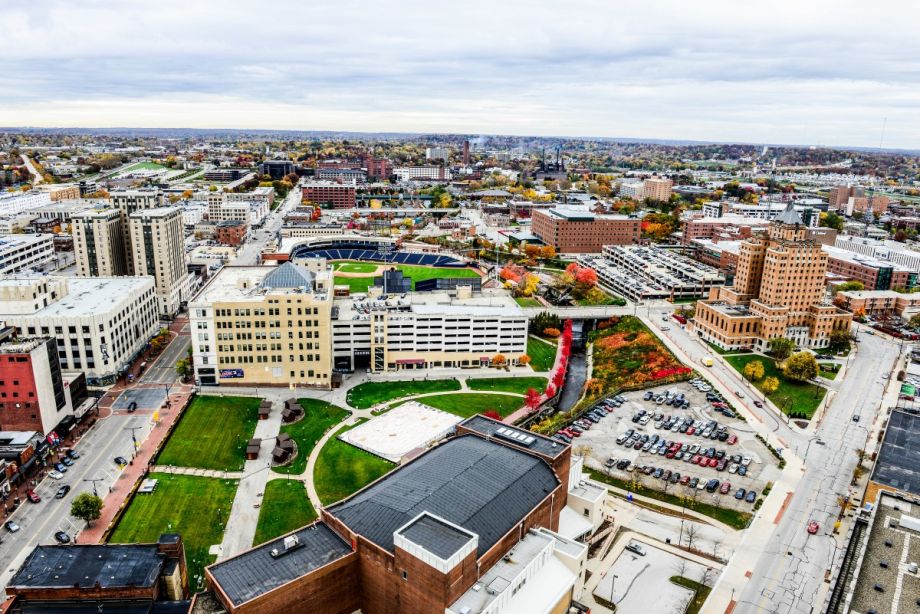
The industrial buildings of Goodyear Heights and Firestone Park present the most complex tear-off projects in Akron's commercial roofing market. These buildings — constructed for heavy manufacturing operations in the mid-20th century — have structural systems, deck configurations, and building envelope conditions that require thorough pre-construction assessment before a tear-off sequence can be designed. Concrete decks with poured lightweight insulating concrete overlays are the most common substrate condition in this inventory, and when that insulating concrete has been saturated for years, its removal is a demolition challenge: it is denser than dry insulating concrete, may have formed bonds with the deck above and below, and must be carefully managed to avoid structural impact on the deck below. We conduct structural deck inspections before any tear-off begins on legacy industrial buildings and have a clear protocol for deck repair or reinforcement when deterioration is found during demo.
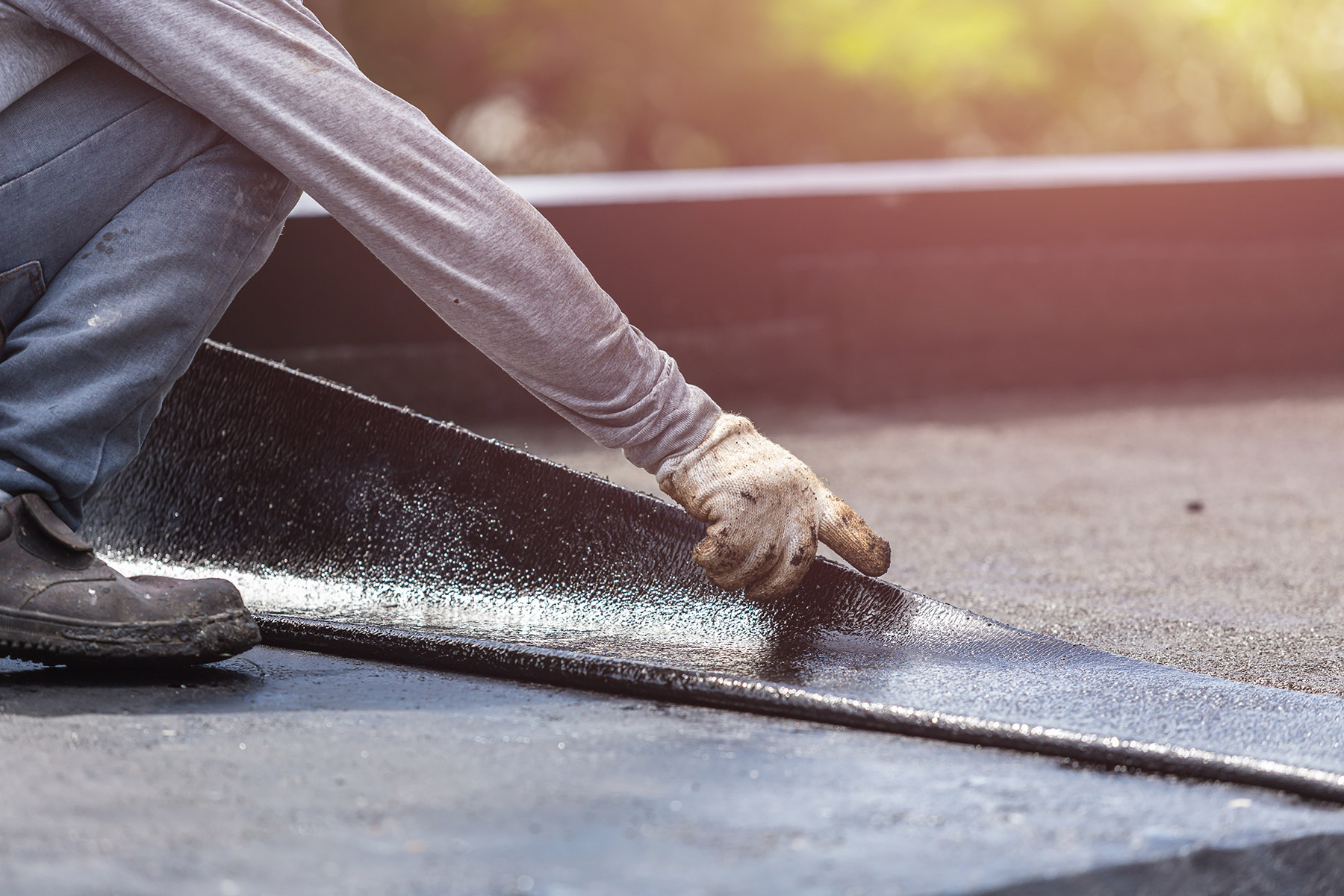
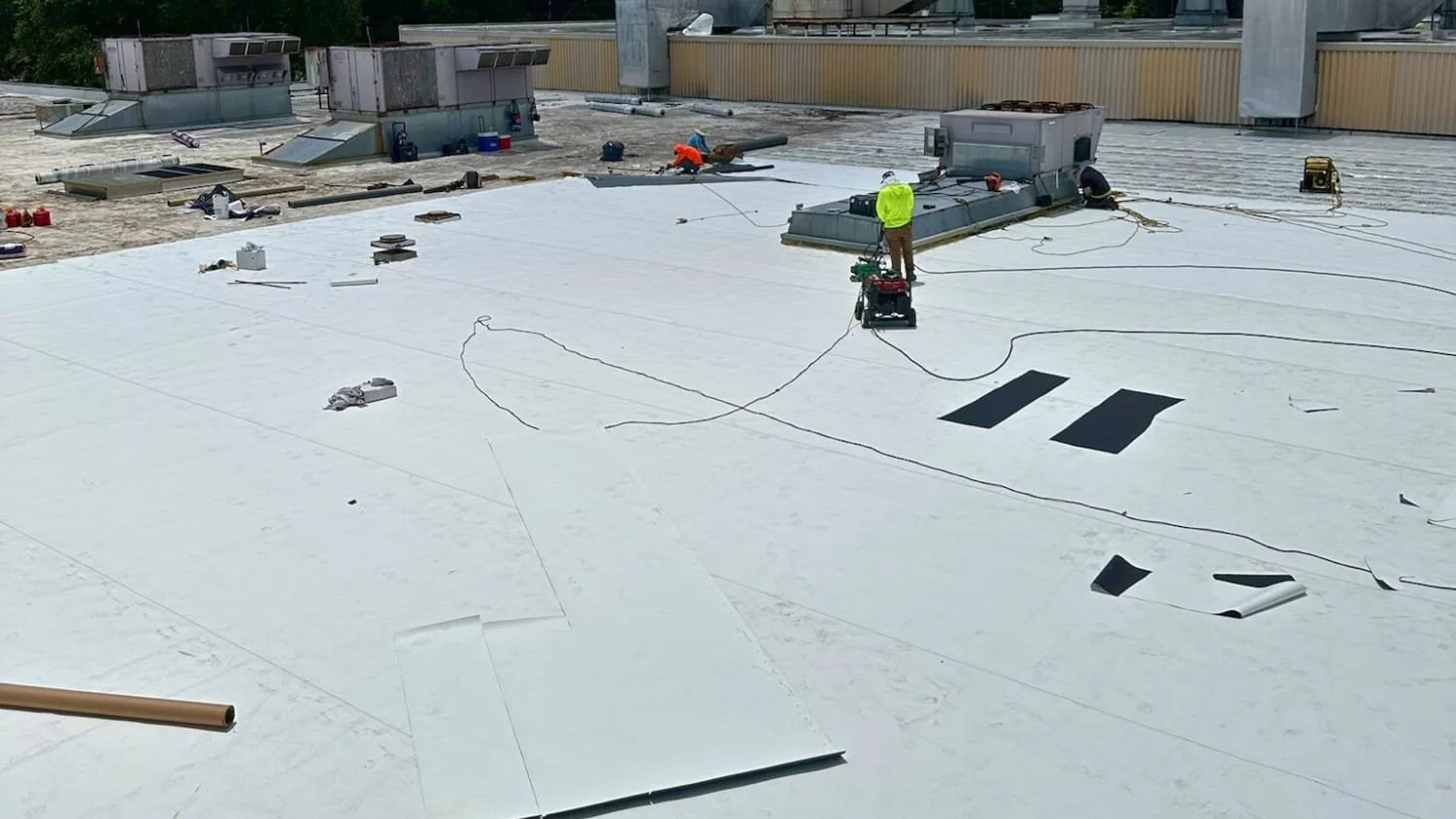
Staging and phasing for large industrial building tear-off in active use is a project management discipline that separates experienced commercial roofing contractors from multifamily contractors attempting commercial work. A 200,000-square-foot warehouse in Port Green Industrial Park that needs full tear-off and replacement cannot be shut down for six weeks. The tear-off must be sequenced in sections — typically 10,000 to 20,000 square feet per phase — with each section taken to deck, inspected, dried, re-insulated, and re-membraned before the adjacent section is opened. Phase boundaries are protected with temporary flashing and tarp systems maintained as a continuous waterproof barrier. Kettle and generator placement, dumpster routing, and material delivery coordination are planned before mobilization so that the active warehouse operations below are disrupted as little as possible during what is, by nature, a disruptive project.
Deck inspection during tear-off is one of the most valuable information-producing events in a building's maintenance history. The deck surface — whether structural concrete, steel, or lightweight concrete — has been concealed for years or decades beneath insulation and membrane, and its actual condition is unknown until the tear-off exposes it. Steel decks that have experienced sustained moisture contact show surface rust, section loss at flute valleys, and in severe cases structural weakness at the ends of deck spans over supports. Concrete decks may show surface spalling, exposed aggregate, or alkali-silica reaction (ASR) damage. We document all deck conditions during tear-off with photographs and measurements, provide a written deck condition report before insulation installation begins, and hold the project for structural engineering review if significant structural deficiencies are found — never simply covering a compromised deck with insulation and membrane without owner notification and engineering assessment.
The specification decision for a replacement system after tear-off should be made with a full understanding of the building's expected service life under current or planned use. A building in Goodyear Heights being repurposed from industrial to mixed-use commercial has different roofing investment horizon expectations than a building being maintained for continued warehouse use. A distribution center on the CAK corridor that will be sold in five years has different capital investment logic than an owner-occupied manufacturing facility expected to remain in operation for 25 years. We provide system comparisons at multiple specification levels — minimum-standard, standard, and premium — with lifecycle cost analysis at each level, so the building owner can select the investment level appropriate to their situation rather than accepting a single default specification.
Ohio Energy Code compliance is a mandatory consideration for any tear-off project, as new roof installation following tear-off is a triggered compliance event for current minimum insulation R-value requirements. Climate Zone 5 (Summit County) requires R-30 minimum continuous insulation for commercial low-slope roofing. Many older Akron buildings were installed with R-19 or R-22, and bringing them to current code at tear-off means specifying additional insulation thickness. The added insulation cost is modest relative to the total project — 2 additional inches of polyiso adds roughly $0.50–$0.80 per square foot to the project cost — and the payback in reduced heating costs in Akron's cold climate is favorable. We provide the code compliance documentation required for building permit issuance, including insulation specifications, assembly R-value calculations, and material compliance data sheets.
Warranty coverage for replacement roofing projects is the final specification element in the tear-off-and-replacement decision. NDL (No-Dollar-Limit) warranties from major single-ply membrane manufacturers cover material failure and, in the best programs, contractor workmanship failure, for 15 or 20 years on qualifying installations. NDL warranty requires: minimum membrane thickness, approved insulation and coverboard, approved attachment system, manufacturer-reviewed project documents for complex details, post-installation flood test or weld probe testing, and factory representative inspection on large or complex projects. We are approved contractors for the major membrane manufacturers and provide the documentation and inspection compliance that securing an NDL warranty requires. For building owners investing in a full replacement, the NDL warranty is the mechanism that protects that investment for the system's full designed service life.
Questions Owners Ask
How do I know when repair is no longer cost-effective and a full replacement is necessary?
The economic trigger point is generally when the annual repair cost exceeds 3–5% of the replacement cost, or when a moisture scan reveals that wet insulation covers more than 25% of the roof area. At 25% wet insulation, the cost of cut-and-patch to salvage a recover project approaches or exceeds the incremental cost of full replacement with proper insulation. Defect-driven metrics include: seam failures appearing in multiple locations per season, base flashing failing across most of the perimeter, or deck deterioration found during inspection or repair that indicates structural compromise from sustained moisture exposure.
How long does a full commercial tear-off and replacement take for a typical Akron building?
A 20,000–50,000 square foot commercial building typically takes 3–7 days of installation work for tear-off and replacement of a standard single-ply system, assuming no significant deck repairs or unexpected conditions. Larger industrial buildings with complex staging requirements, deck repair work, or high penetration density take proportionally longer. We provide a detailed project schedule in our proposal and update it when conditions during tear-off require scope adjustments. Permit lead time — typically 5–15 business days in Summit County — is factored into the project timeline at proposal stage.
What is the typical cost range for a Commercial Roof Replacement in Akron?
Full tear-off and replacement of a commercial flat roof in the Akron market currently runs $10–$18 per square foot for standard single-ply (TPO or EPDM) systems, $14–$22 for modified bitumen two-ply, and $20–$35 for premium systems or complex industrial projects with significant deck repair requirements. These ranges reflect 2025 material and labor costs and include permit fees. Specific pricing depends on tear-off complexity, insulation thickness required, penetration count, parapet conditions, and access requirements. We provide itemized written proposals for all projects above 5,000 square feet.
Can roofing demolition waste from a tear-off be recycled in Akron?
TPO and EPDM membrane tear-off material can be recycled through roofing material recycling programs — Firestone and other manufacturers have take-back programs for qualifying volumes of their own material. Polyiso insulation and modified bitumen are typically landfilled; limited recycling options exist but are not consistently available in the northeast Ohio market. We coordinate demolition waste disposal through licensed haulers and can provide recycling certificates for recyclable volumes when they are available. Akron's landfill tipping fees are factored into our tear-off cost estimates.
Does my building need an engineer for a commercial roof replacement project?
Structural engineering involvement is required for any project where deck repairs are identified during tear-off, where significant additional dead load is being added (heavy insulation systems, ballasted assemblies), or where the building's use or occupancy is changing in a way that affects roof load design. For standard reroofing of a building in its original use with comparable-weight assembly replacement, structural engineering is typically not required but is recommended for buildings with documented structural concerns or significant age-related deterioration. We identify situations that warrant structural review during our pre-project assessment and do not proceed with affected scope without engineering clearance.