
Commercial Roof Coatings in Akron for Akron commercial properties
A coating recommendation starts with adhesion, moisture, drainage, membrane condition, detail preparation, and warranty eligibility—not every existing roof is a restoration candidate. Northeast Ohio's severe thunderstorm season arrives reliably in May and extends through June and into August, carrying with it the hail events that are among the most consequential insurance losses in the commercial roofing market. Summit County is positioned in a geography where Gulf moisture streams interact with cold fronts descending from the Great Lakes region to produce supercell thunderstorms capable of generating hail from marble-size to golf ball and larger. A single storm event on a May afternoon can impact every commercial rooftop on the Fairlawn-Bath retail corridor, the CAK airport-area commercial park, and the Montrose-Ghent district simultaneously — creating a regional concentration of claims that overwhelms adjusters and drives material supply constraints across the northeast Ohio contractor market.
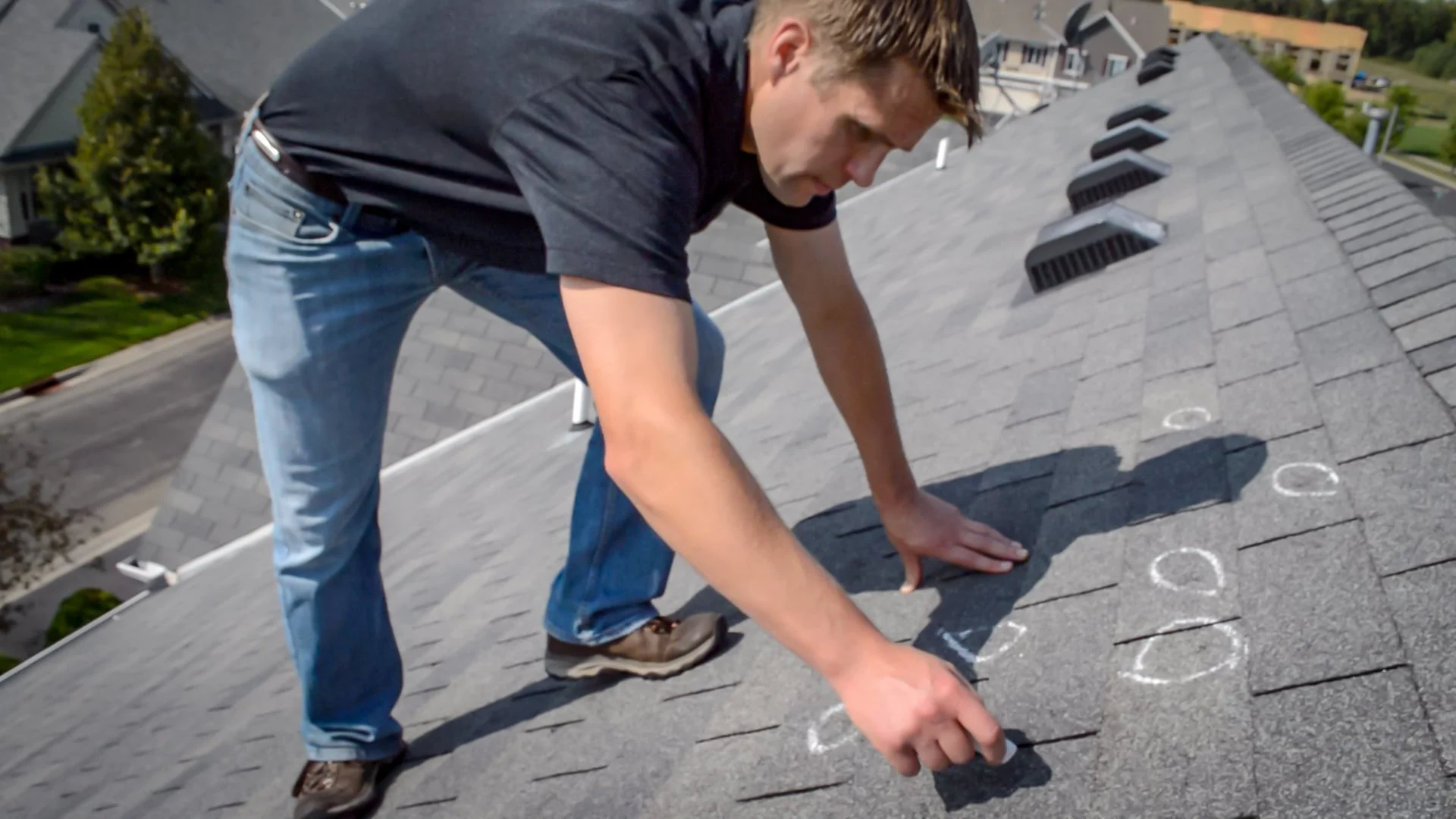
Hail damage documentation is the critical first step in any restoration process, and the documentation window is finite. Ohio's statute of limitations for property insurance claims provides a nominal deadline, but insurance carriers increasingly require prompt notification and complete damage documentation before they will consider a claim. Hail damage on commercial single-ply membranes follows a predictable pattern: fresh impact creates a dimple or puncture in the field membrane and a circular bruise ring around it; over weeks and months, that impact point weathers and the distinction between hail damage and general membrane wear becomes harder to establish convincingly. We conduct post-storm hail inspections within days of a significant storm event and produce documentation formatted to the specific requirements that Summit County's major commercial carriers use for claim evaluation.
The CAK airport-area commercial corridor — flex industrial buildings, distribution centers, and office campuses along the I-77 corridor south of Akron — is particularly exposed to hail events because the flat, open landscape provides minimal break on storm cell movement. Large single-ply roofs on metal-deck construction in this area are among the most hail-vulnerable commercial roofing configurations in the Akron market. TPO membranes in the 45-mil specification show functional punctures from 1.5-inch hail at an impact velocity consistent with this zone's storm cell histories; 60-mil TPO shows significantly better impact resistance. If your CAK-area or Fairlawn commercial building has 45-mil single-ply installed before 2015, a post-storm inspection is warranted even if no interior leak has appeared yet — impact damage creates a breach point that allows moisture to begin infiltrating the insulation long before it manifests as a visible interior drip.
Multi-event seasonal documentation is a concept that matters enormously in northeast Ohio's insurance market and is poorly understood by most commercial building owners. Summit County regularly experiences two, three, or four significant hail events in a single spring/summer season. Each event can add incremental damage on top of the prior event's impact pattern, and by September a building that survived the first May storm may have a membrane that is effectively compromised across 40% of its field area from cumulative impact damage. Insurance carriers have become sophisticated about multi-event claims — they distinguish between single-event total loss (most favorable claim treatment) and cumulative seasonal damage (more complex claim). We help building owners document each event separately, maintain a running damage log, and position their claim history to support the most accurate and favorable characterization of the damage sequence.
HVAC equipment and rooftop units take hail damage differently from membranes, and the combined roof-plus-equipment claim is the most comprehensive way to document a commercial hail loss. Sheet metal housings on rooftop HVAC units dent from hail impacts in a way that provides direct physical evidence of hail size — insurance adjusters use the dent pattern and size distribution on condenser fins and unit panels to establish hail diameter, which directly affects claim validity for membrane impacts that may be more ambiguous. We inspect rooftop equipment as part of every post-hail assessment and include equipment condition documentation in our claim support package. For large buildings with multiple rooftop units, this documentation often provides the clearest hail size evidence in the entire claim file.
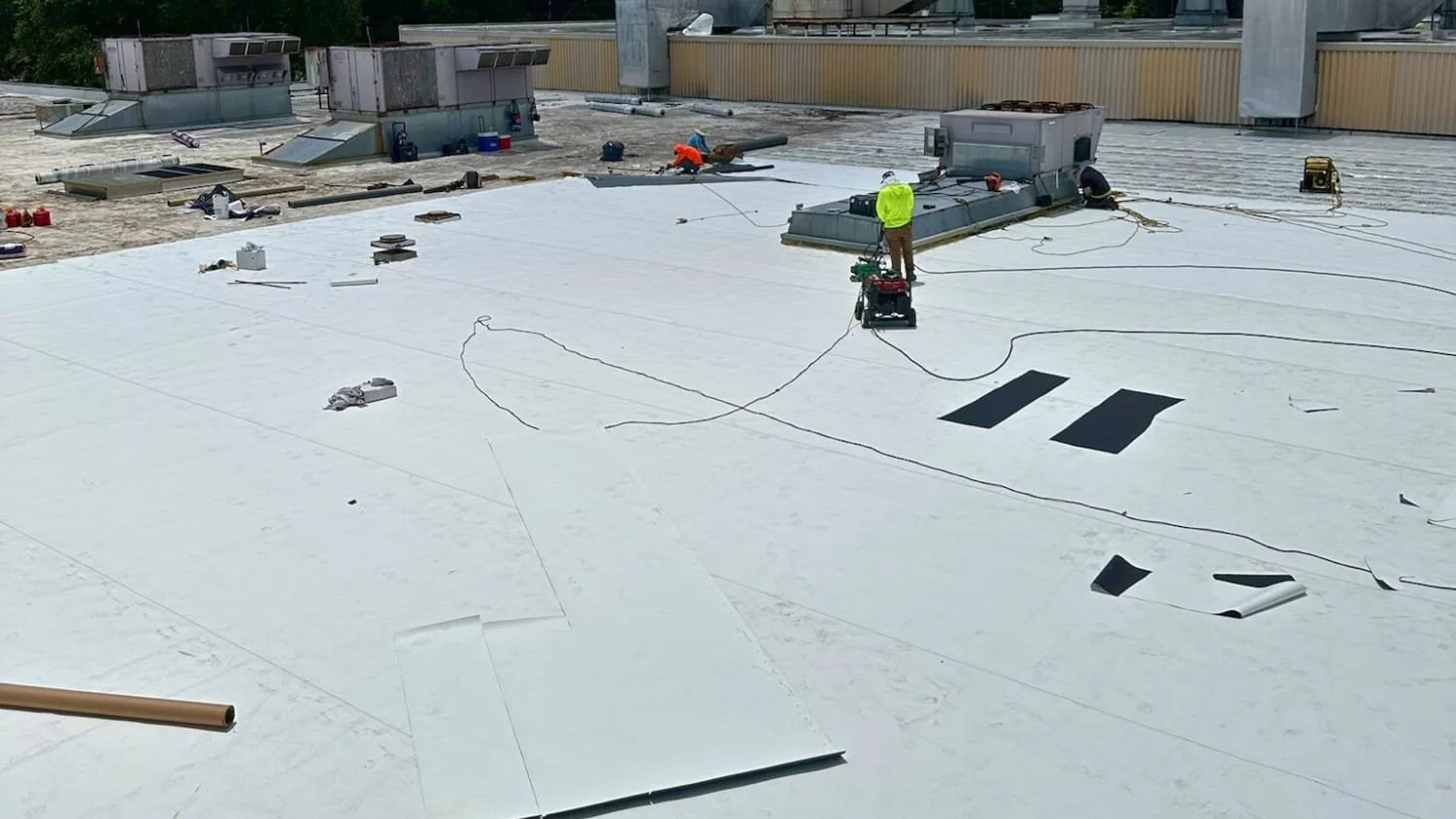
Commercial roof restoration following hail damage typically follows one of three paths depending on damage severity. For relatively minor impact events where membrane integrity is maintained but surface dimpling and bruising are documented, a silicone or acrylic coating applied over the damaged areas can restore waterproofing performance and extend system life while supporting a claim for the coating cost. For moderate damage where a significant percentage of the field membrane has sustained functional impact, a full membrane replacement may be warranted and is often the insured repair scope. For severe events with structural damage (collapsed insulation, deck dents, parapet damage), the restoration scope may include deck repairs, full insulation replacement, and complete membrane installation.
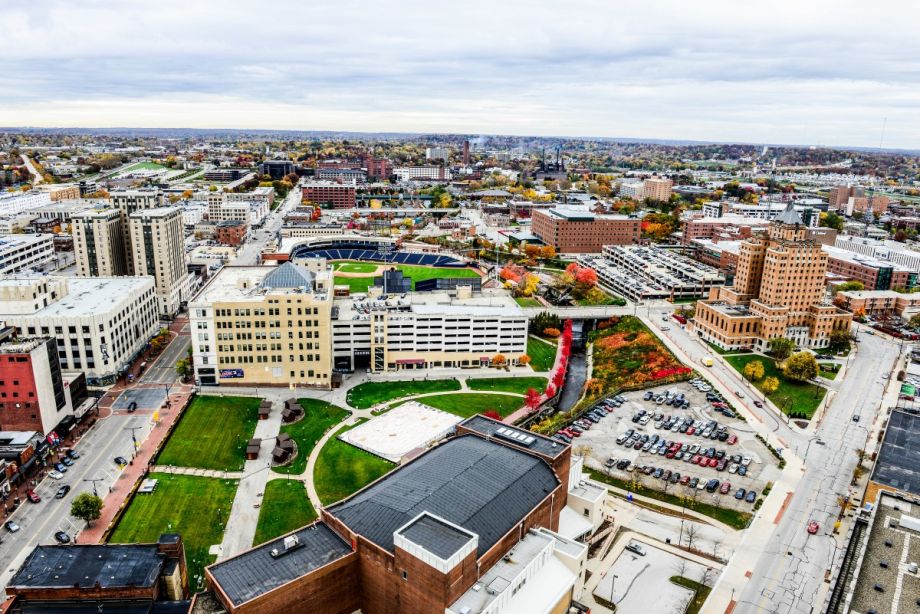
The Bounce Innovation Hub on the University of Akron campus and the commercial buildings in the adjacent university district have specific post-hail needs: occupied buildings with active business operations that cannot tolerate extended roof opening periods. We plan hail restoration projects on occupied buildings with phased staging that maintains continuous dry-in coverage across the project duration, never leaving an unsealed area open overnight or ahead of a forecast weather event. Project scheduling for university and medical campus hail restoration is coordinated around academic calendars, research lab operating schedules, and hospital operational requirements.
Selecting a roofing contractor for commercial hail claim work requires care. The post-storm market in northeast Ohio attracts out-of-area contractors — some legitimate, some not — who arrive after significant storm events and actively solicit damaged building owners with promises of full claim coverage and minimal cost. Ohio's contractor licensing and insurance requirements apply to all commercial roofing work regardless of where a contractor is headquartered, and the documentation quality from these transient operators is often inadequate for serious insurance claims. We are permanently based in the Akron market, licensed in Ohio, and maintain ongoing relationships with the commercial properties we serve — which means we're available for supplemental inspections, re-inspections, and follow-up documentation as the claim process proceeds.
Questions Owners Ask
How do I know if my roof sustained hail damage after a storm?
Hail damage on commercial roofing is often not visible from street level and does not always cause an immediate interior leak. Indicators of likely hail damage include: visible dents on HVAC unit panels and condenser fins, displaced granules on mod-bit or BUR cap sheets (visible as granule accumulation in gutters and drains), and small circular impact dimples on single-ply membranes visible on close inspection. If you know a hail event passed over your building, schedule a professional inspection within two weeks — don't wait for a leak to confirm damage that may already be allowing moisture into your insulation.
My building has 45-mil TPO. How much hail does it take to cause functional damage?
Industry testing data shows that 45-mil TPO sustains functional punctures (breaches that allow moisture infiltration) from 1.5-inch diameter hail at typical storm impact velocities. Hail larger than 1.75 inches will puncture most 45-mil membranes. Summit County severe thunderstorm events regularly produce hail in the 1- to 2-inch range, which means that a significant portion of hail events affecting Akron's commercial stock are capable of causing functional damage to 45-mil single-ply. If your building has 45-mil TPO or EPDM and is in a storm's confirmed hail path, a close inspection is warranted.
Will my insurance company send their own adjuster? Do I need my own inspection?
Insurance carriers will send an adjuster, but the adjuster's role is to evaluate the claim from the carrier's interest, not yours. Having an independent inspection from a licensed roofing contractor before or during the adjuster's visit provides you with documentation from your own advocate and a basis for supplemental claims if the initial adjuster settlement is insufficient. In complex multi-event or multi-system claims (membrane plus HVAC plus edge metal), an independent contractor inspection consistently produces more complete claim documentation than adjuster-only assessments.
How long does a commercial hail damage restoration take?
A straightforward single-ply membrane replacement on a 20,000–50,000 square foot building typically takes 5–15 days of installation time, not counting the time required for insurance claim processing, material procurement, and permit issuance. Complex projects involving deck repairs, insulation replacement, or high-penetration-density areas take longer. We provide a project schedule at proposal time and update it as insurance claim and permit timelines develop. We keep the building dry during the process regardless of how long claim processing takes.
What if I had hail damage from two separate storms this season? Can I file separate claims?
Yes — separate storm events are separate insurance claims, and Summit County building owners who experienced hail damage in multiple events in a single season can file separate claims for each event. The requirement is that you can document the timing and origin of each event and that the damage attributed to each event is separable from prior and subsequent damage. We assist with the documentation necessary to support multi-event claims, including time-stamped post-storm inspection reports for each event that clearly characterize the damage that existed at the time of each inspection.