
Hail Damage Roof Insurance Claims in Akron, OH for Akron commercial properties
Northeast Ohio's severe thunderstorm season, typically running from spring into early summer, is the primary source of hail activity that affects Akron's low-slope commercial roofs. The flat and low-slope membrane systems common on industrial, retail, and office buildings here — EPDM, TPO, and modified bitumen — respond to hail very differently than a residential shingle roof, and the evidence an adjuster looks for is correspondingly different. Bruising, fracturing, and granule displacement on a membrane surface can be subtle, which is exactly why a documented, systematic inspection matters more than a quick visual check from the parking lot.
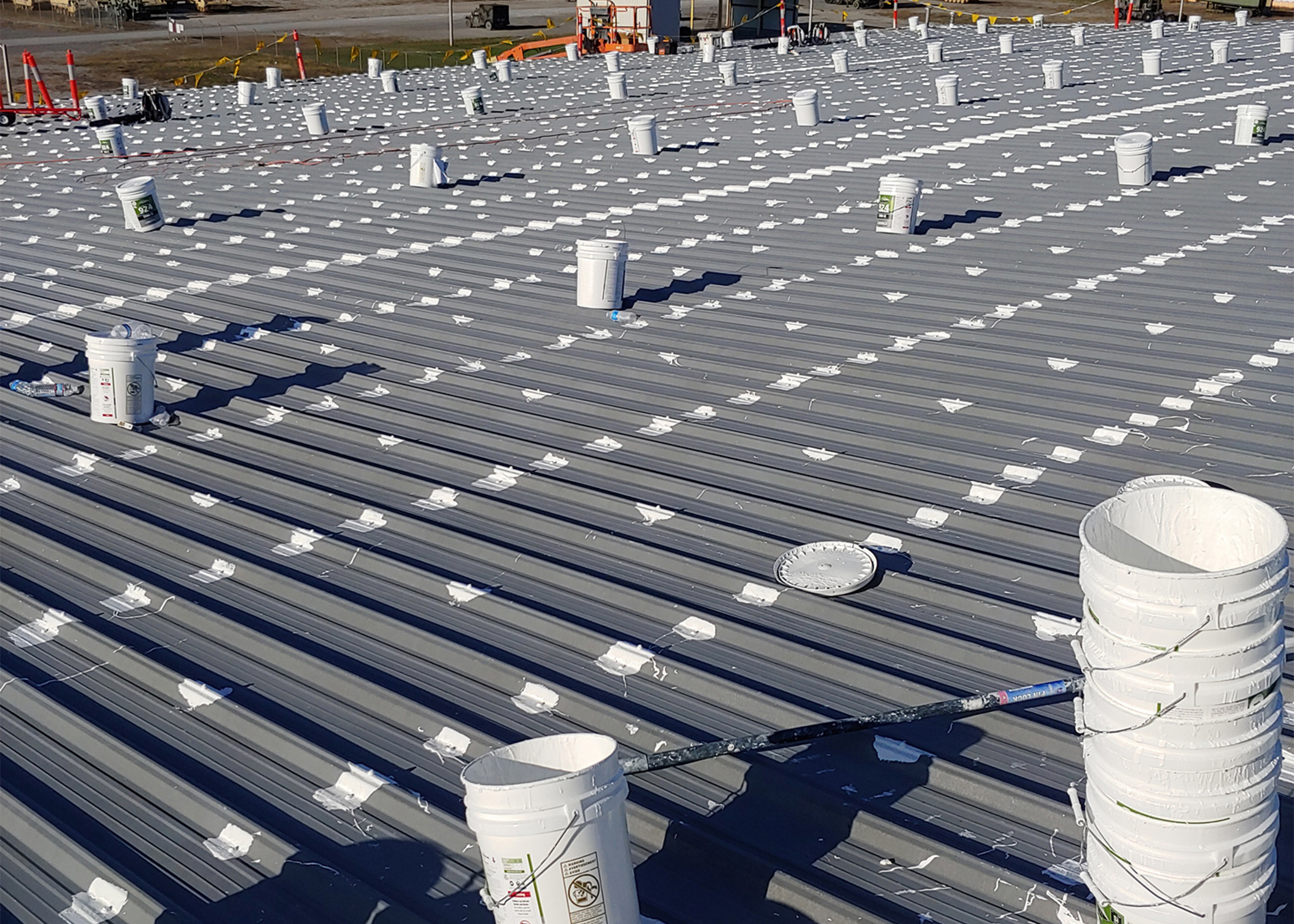
We inspect the full roof surface after a hail event, working in a grid pattern across the field membrane so that scattered impact points aren't missed. Membrane bruising is cross-checked against sheet-metal evidence elsewhere on the roof — HVAC unit housings, condenser fin damage, exhaust caps, and edge-metal coping — because denting on rigid metal surfaces gives a clearer, more measurable read on hail size and direction than membrane marks alone. That combination of evidence is what supports a defensible hail-size determination when a carrier's adjuster reviews the claim.
Hail bruising on a membrane surface becomes progressively harder to distinguish from ordinary weathering as UV exposure and foot traffic continue after the storm. If a second or third hail event strikes the same roof before the first is documented, attributing specific damage to a specific storm date becomes genuinely difficult, and carriers scrutinize claims that can't clearly separate one event from another. We photograph impact points with scale references, log GPS-tagged locations across the roof plan, and record the date of inspection relative to the storm so the timeline in our report matches the claim being filed.
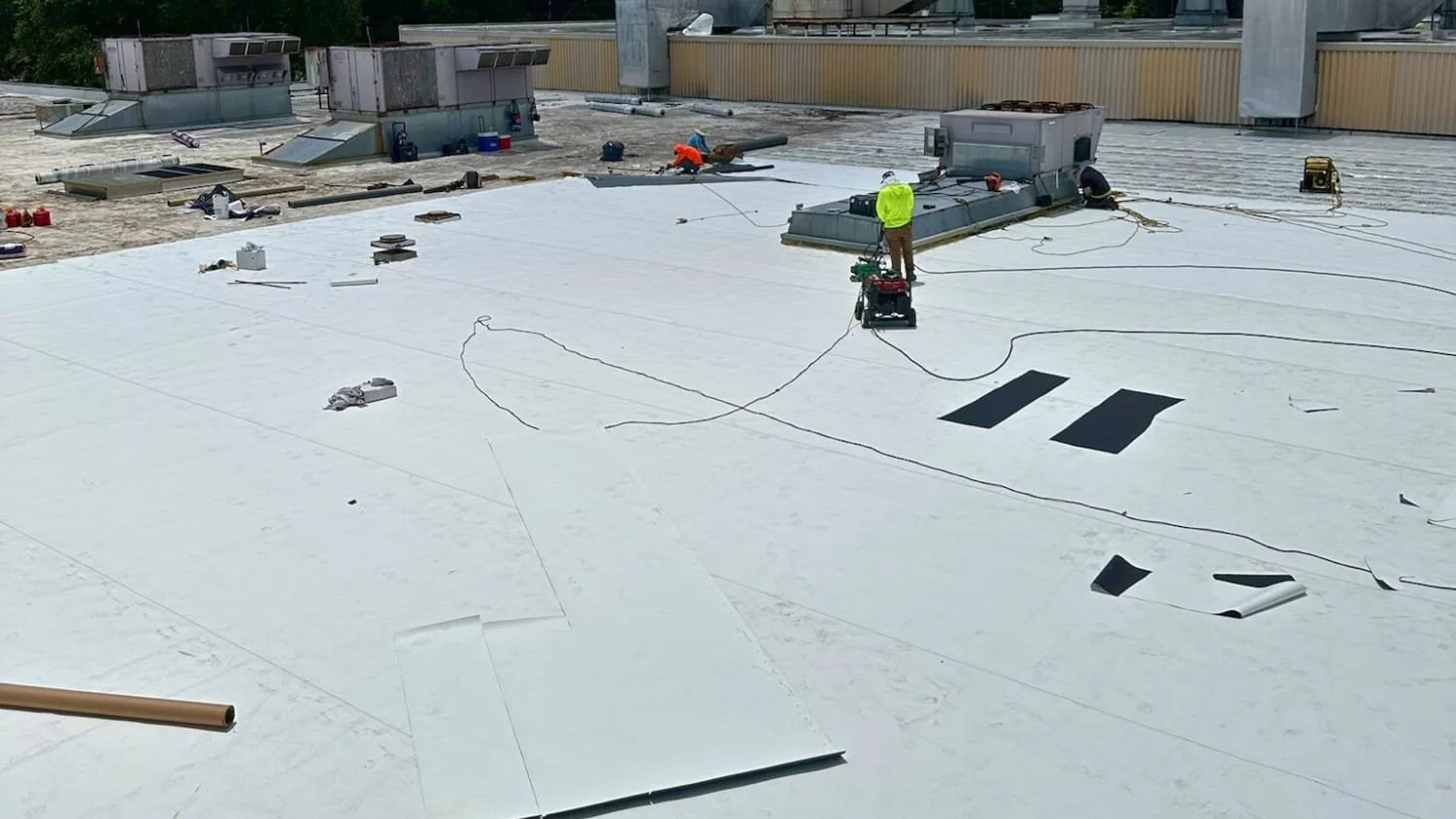
When the carrier's adjuster schedules a roof inspection, we walk the roof with them and point directly to the documented impact points, HVAC dent evidence, and any membrane punctures or seam separations the hail caused. A hail-caused repair scope on an older EPDM or built-up roof can also trigger code items — updated insulation R-values or edge-metal attachment standards — that a narrow patch-only estimate would miss, so our scope accounts for what a complete, code-compliant repair actually requires rather than the minimum visible fix.
We're your roofing contractor, not a public adjuster — we document and substantiate the hail damage so you and your adjuster work from an accurate, defensible scope. If a settlement comes back below the documented repair cost, we can produce supplemental photographs or a revised measurement addressing the specific items the carrier disputed.
How we keep Hail Damage Roof Insurance Claims in Akron, OH practical
Before pricing Hail Damage Roof Insurance Claims in Akron, OH, we confirm the roof areas involved, where water is moving, how crews can access the roof, and which assumptions could change the budget after closer inspection. That keeps the recommendation tied to the building instead of a broad square-foot number.
For Hail Damage Roof Insurance Claims in Akron, OH, we also separate immediate stabilization from long-term planning. Temporary dry-in, targeted repair, maintenance, coating, recover, and replacement can all be valid, but they should not be blended into one vague scope.
For Hail Damage Roof Insurance Claims in Akron, OH, the service scope separates the active roof condition from the owner's longer-term plan. A leak response visit may only need tracing, temporary protection, and a permanent repair area. A replacement discussion needs more: tear-off assumptions, insulation thickness, edge metal, deck condition, access, daily close-in, and how the building stays open while crews work.
Access for Hail Damage Roof Insurance Claims in Akron, OH is reviewed early because it can change the whole project. Downtown Akron, medical campus buildings, university-area properties, retail centers, warehouses, and industrial facilities each create different rules for staging, lift use, parking, tenant notifications, safety zones, and after-hours work.
For Hail Damage Roof Insurance Claims in Akron, OH, weather is treated as a project constraint, not background information. Snow, freeze-thaw movement, hail, heavy rain, summer storms, and cold-weather close-in affect how much roof can be opened, how materials are stored, and when temporary protection has to be installed before the next work step.
For Hail Damage Roof Insurance Claims in Akron, OH, budget conversations stay more useful when the drivers are named. Wet insulation, deck repair, tapered insulation, drains, scuppers, coping, wall flashing, rooftop equipment, fall protection, material staging, disposal, and occupied-building sequencing can change cost and timing more than the roof label itself.
Field review for Hail Damage Roof Insurance Claims in Akron, OH has to respect what the roof is connected to. Rooftop units, condensate lines, exhaust fans, grease containment, skylights, tenant penetrations, parapet walls, expansion joints, and older repair patches can all change where water travels and where a permanent repair has to land.
For Hail Damage Roof Insurance Claims in Akron, OH, scheduling is part of the technical scope. A roof plan that ignores loading access, tenant entrances, parking, material deliveries, noise, odor, security, and business hours can look acceptable on paper while creating unnecessary disruption once crews arrive. We keep those constraints visible before the work starts.
The Hail Damage Roof Insurance Claims in Akron, OH roof record also calls out unknowns, because hidden moisture, concealed deck damage, blocked drains, and undocumented prior repairs can change the correct next step.
The Hail Damage Roof Insurance Claims in Akron, OH closeout record matters after the work is done. We keep notes, photo locations, access constraints, completed repair areas, and remaining risk items connected to the roof area so owners can use the file for follow-up maintenance, budget planning, tenant communication, procurement review, or the next capital cycle.
Questions Owners Ask
How can you tell if hail actually damaged a membrane roof, versus normal wear?
Hail impact on a single-ply membrane typically leaves a distinct bruise or fracture pattern that differs from the scuffing and granule loss of general weathering. We cross-reference membrane marks with HVAC housing dents and other sheet-metal evidence on the same roof, since metal denting is harder to mistake for wear and helps confirm hail size and direction.
Does every hailstorm that hits Akron cause insurance-claimable roof damage?
No. Smaller hail can strike a roof without breaching the membrane or denting adjacent metal, in which case there may be no claimable damage even though the storm was real. An inspection after any significant hail event is the only reliable way to know whether the roof was actually affected.
How soon after a hailstorm should I get the roof inspected?
As soon as reasonably possible, ideally within a few days. Hail bruising on membrane surfaces becomes harder to distinguish from ordinary weathering as time passes, and if the building is struck by a second storm before the first is documented, attributing damage to a specific event gets significantly harder.
Can hail damage cause a roof leak weeks or months after the storm?
Yes. A hail fracture in a membrane can be small enough that it doesn't leak immediately but continues to work under thermal movement and freeze-thaw cycling until it opens into an active leak. That's one reason a post-storm inspection that documents even minor hail marks is valuable — it establishes the storm as the cause before a leak eventually shows up.
Will you negotiate the hail claim settlement with my insurance company?
No. We inspect the roof, document the hail damage, and produce the technical report and repair scope your claim relies on. Negotiating the settlement is the carrier's adjuster process, handled by you directly or by a public adjuster you choose to retain.