Commercial Roof Insurance Claims in Akron, OH for Akron commercial properties
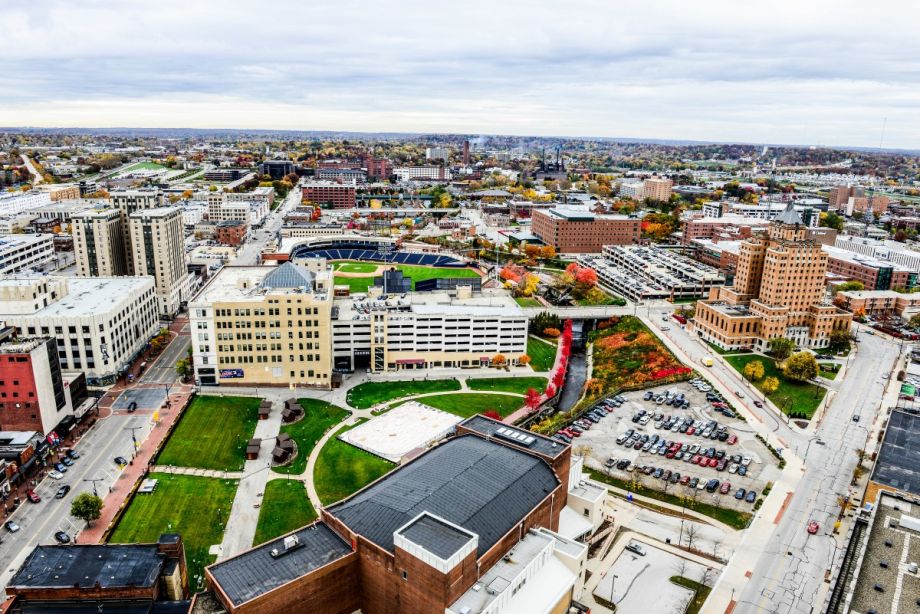
Akron's commercial roof stock carries the fingerprints of the city's industrial history. Former rubber-manufacturing complexes along the industrial corridor, the polymer and chemical-processing buildings that grew out of that heritage, and the adaptive-reuse office and mixed-use conversions downtown all present different roofing systems, different ages, and different insurance-claim considerations when a storm or a covered peril causes damage. A commercial roof insurance claim in Summit County starts with an accurate picture of what's actually on the roof and what the event actually did to it, and that picture is what we build for building owners before an adjuster ever sets foot on the property.
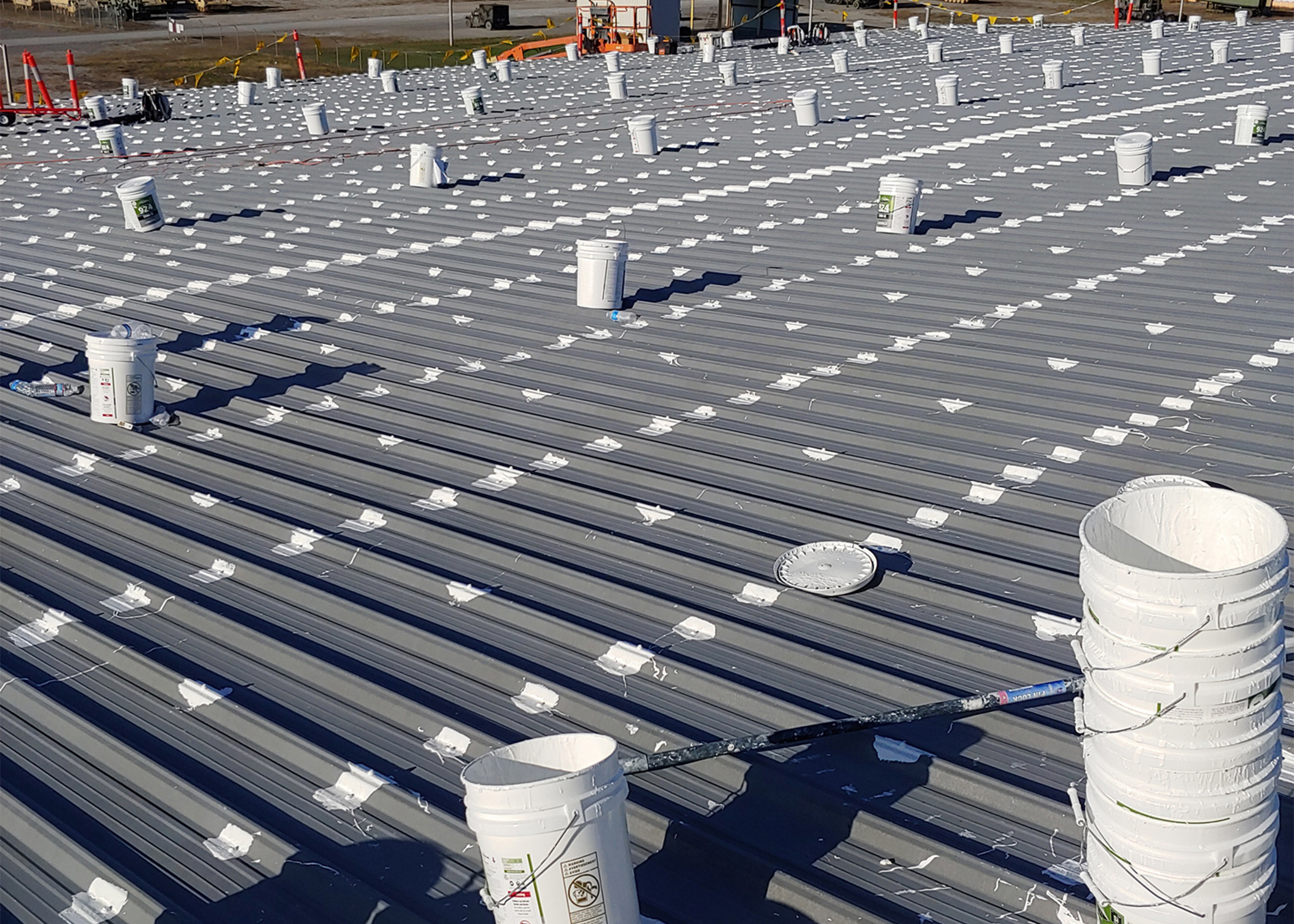
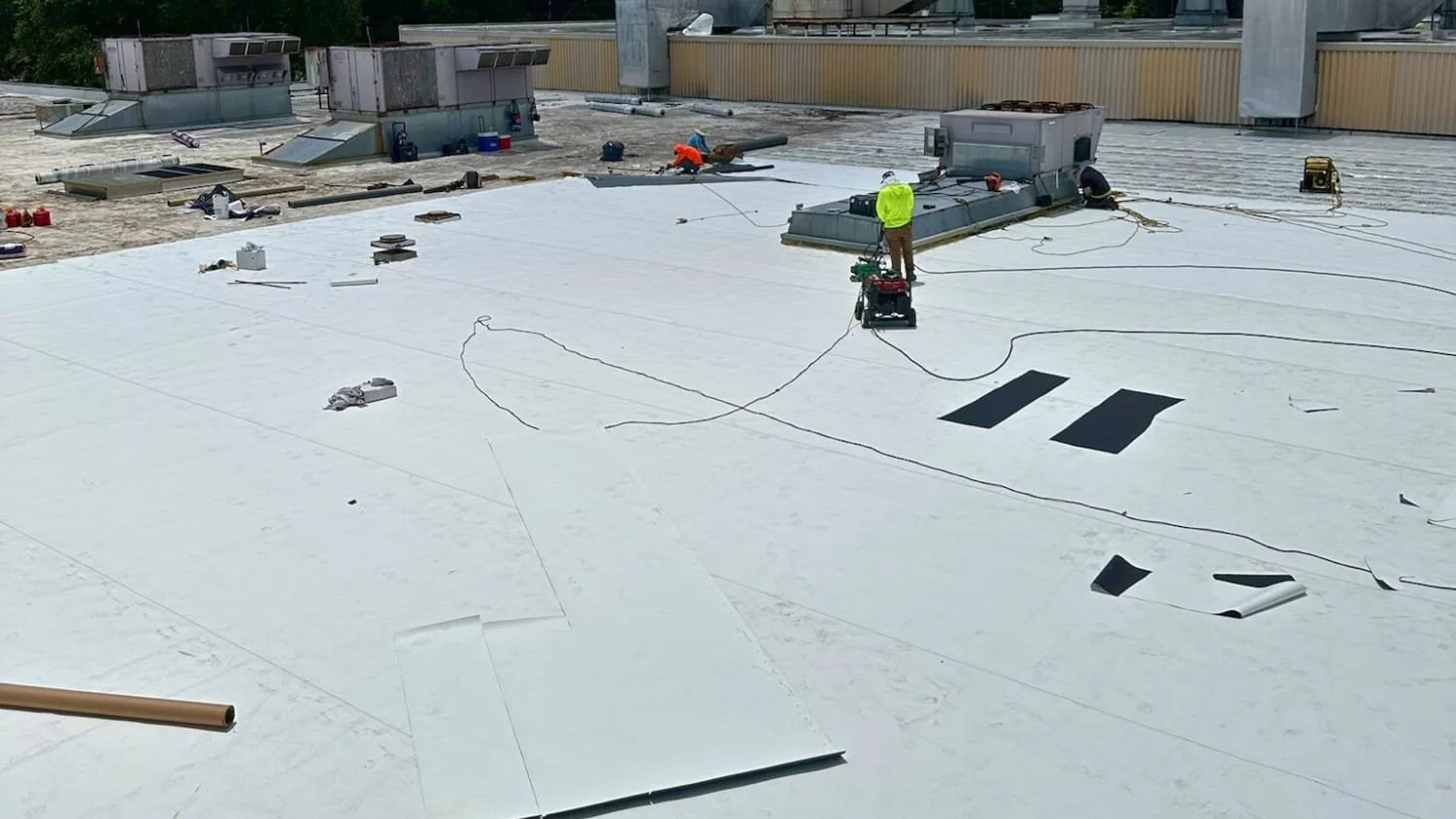
A defensible commercial roof claim rests on documentation that ties observed damage to a specific covered event: photographs with timestamps and location context, moisture-scan or probe readings where water intrusion is suspected, measurements of affected field membrane and flashing runs, and a written scope that separates storm-caused damage from ordinary wear. We produce that package as the roofing contractor of record, inspecting the roof, documenting what we find, and writing up findings in a format an adjuster can evaluate quickly. We don't file claims or represent building owners in negotiations with a carrier; our role is making sure the technical record supporting your claim is accurate and complete.
When the carrier schedules a roof inspection, we meet the adjuster on site. Having the contractor who documented the damage walk the roof with the adjuster tends to shorten the back-and-forth — questions about a membrane puncture, a bent HVAC housing, or a section of damaged coping metal get answered on the roof instead of through follow-up correspondence weeks later. We point to the specific damage we documented, explain the likely mechanism, and make sure nothing in our original scope gets left off the adjuster's own assessment.
Older rubber-era industrial buildings and downtown adaptive-reuse properties often carry roof assemblies that were built or last replaced under a different code cycle, and a storm-triggered repair on those roofs can trigger code-upgrade requirements — additional insulation, updated edge-metal attachment, or drainage changes — that a partial repair estimate misses. We write the scope to reflect the full extent of what a proper repair actually requires, including those code items, so the claim reflects the true cost of putting the roof back in service rather than a patch that reopens the same failure point during the next storm season.
When a settlement comes back lower than the documented repair cost, or a carrier disputes whether damage is storm-caused versus pre-existing wear, we can produce a supplemental technical report addressing the specific items in dispute. That supplemental documentation supports a reconsideration or appraisal request through your policy's own dispute process, and we're available to attend a re-inspection if the carrier requests one. We're your roofing contractor, not a public adjuster — we document and substantiate the roof damage so you and your adjuster, or the public adjuster you've retained, work from an accurate scope.
Freeze-thaw cycling is a factor Summit County adjusters weigh carefully on any winter-related claim. A membrane seam or flashing detail that failed in January may show stress from repeated freeze-thaw movement going back several seasons rather than from a single event, and a claim that doesn't account for that distinction is likely to draw scrutiny. Our inspection reports separate storm-attributable damage from cumulative freeze-thaw wear so the claim we support holds up to that review.
Questions Owners Ask
Does insurance cover commercial roof replacement in Akron?
Most commercial property policies cover roof damage caused by a specific, sudden event such as hail, wind, or a snow-load failure, provided the damage is documented and reported within the policy's notice window. Gradual deterioration, long-standing ponding from a drainage problem, or deferred maintenance is typically excluded, so the outcome depends on whether the damage can be tied to a covered event.
What does the commercial roof insurance claim process look like?
It starts with an inspection and documentation of the damage, followed by notice to your carrier, a scheduled adjuster inspection, and a settlement offer based on the documented scope. We handle the inspection, documentation, and adjuster meeting on the roofing side; you or your public adjuster handle the claim submission and negotiation with the carrier.
What if my claim gets denied or underpaid?
A denied or underpaid claim can often be appealed with supplemental documentation — additional photographs, a revised measurement, or a clearer explanation of the damage mechanism. We can produce that supplemental technical report to support a reconsideration or an appraisal request under your policy.
How do you decide whether a roof needs repair or full replacement after storm damage?
We base that call on the extent and pattern of the damage, the remaining service life of the existing membrane, and whether a repair can be executed without leaving unresolved risk elsewhere on the roof. We document the reasoning in the scope so it stands up to adjuster review.
Will you meet with my insurance adjuster?
Yes. We meet the adjuster on the roof, walk through the documented damage, and answer technical questions about the scope. Having the contractor who inspected the roof present for that meeting tends to resolve scope questions faster than written correspondence alone.
Do you handle the claim paperwork and negotiate with my insurer for me?
No. We are your roofing contractor, not a public adjuster. We inspect, document, and produce the technical scope your claim relies on; filing the claim and negotiating settlement terms with the carrier is handled by you or by a public adjuster you retain.