
Restaurant and Food Service Building Roofing in Akron, OH for Akron commercial properties
Diamond Deli and Barbeque, a beloved Akron institution that has operated in the Highland Square neighborhood for years alongside the national QSR franchises that line South Arlington Street, represents the range of food service properties that commercial roofing contractors encounter across Summit County. Restaurant and Food Service Building Roofing in Akron, OH is among the most technically demanding commercial applications precisely because of what goes on inside — constant cooking, high-heat equipment, hood exhaust systems, and the grease-contaminated vapor that travels from commercial kitchen hoods to the rooftop penetrations serving them. In Akron's aging commercial building stock, many restaurant roofs carry decades of accumulated grease contamination that complicates any re-roofing project significantly.
Kitchen exhaust penetrations are the defining challenge of Restaurant and Food Service Building Roofing in Akron, OH, and the problem is more severe in Akron's older restaurant buildings than in newer construction. Type I commercial hood exhaust hoods are required over all commercial cooking equipment, and the grease-laden vapor they exhaust travels through ductwork to a rooftop discharge point. Over time, grease accumulates on the membrane around the exhaust discharge — on the duct collar, the surrounding flashing, and the membrane extending downwind. This grease contamination degrades standard TPO and EPDM membrane chemistry, creating localized failures near exhaust penetrations that are common enough to be a predictable failure pattern in Summit County Restaurant and Food Service Building Roofing in Akron, OH.
Proper flashing of Type I hood exhaust collars requires a specific detail that goes beyond standard pipe boot installation. The collar must be raised above the membrane surface to prevent rooftop water from entering the exhaust duct, the flashing must accommodate the thermal movement of the duct (which heats and cools with every service cycle), and the membrane around the collar must be either protected with a grease-resistant cover sheet or replaced with a material specifically formulated to resist grease degradation. Akron commercial roofers with restaurant experience maintain the specific flashing details and grease-resistant membrane materials needed for this application.
Fire suppression system penetrations are another restaurant-specific roofing challenge. Commercial kitchens require fire suppression in cooking equipment hoods, and the suppression system pipes often run vertically through the roof membrane to reach rooftop connection points. These small-diameter pipe penetrations require custom flashing, and their placement — often adjacent to other kitchen exhaust penetrations — means they are located in the same grease-contaminated zone that challenges other penetrations in the area. A roofing contractor re-roofing a Summit County restaurant needs to catalog every fire suppression penetration and confirm with the restaurant operator that each one is properly identified and flashed in the completed work.
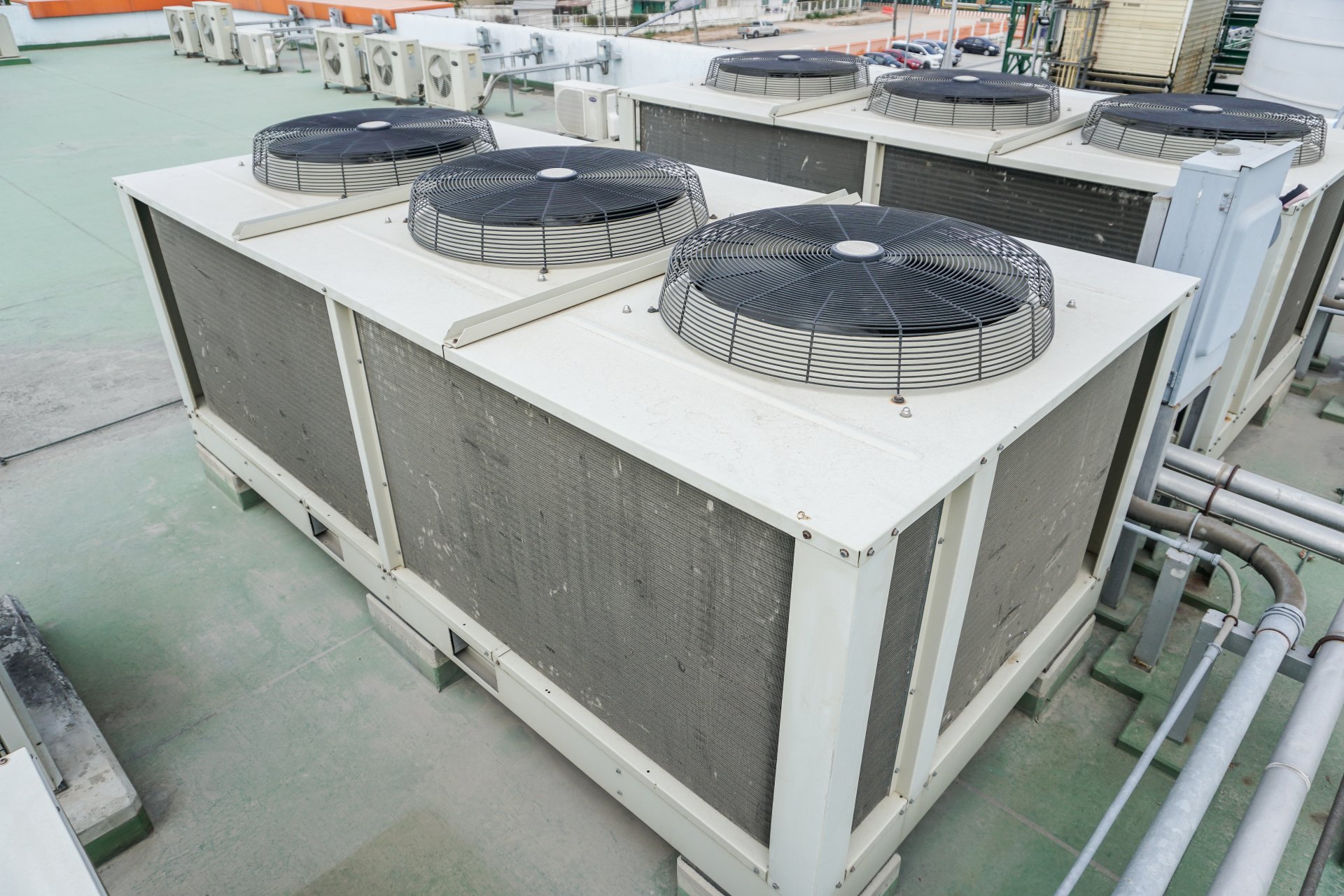
HVAC cycling frequency in commercial kitchens is dramatically higher than in office or retail buildings, because kitchen equipment generates intense heat loads that cause the building's HVAC system to cycle on and off throughout each service shift. This frequent cycling creates vibration and thermal expansion/contraction stress on rooftop units, their curbs, and the surrounding membrane. Akron Restaurant and Food Service Building Roofing in Akron, OH contractors who understand kitchen HVAC loading specify pre-manufactured curbs with vibration isolation pads under RTU bases, and the membrane termination at curb edges uses flexible flashings that accommodate movement without cracking or delaminating.
Grease trap vent stacks are a plumbing penetration that non-specialized roofing contractors sometimes overlook when inventorying restaurant roof penetrations. Grease trap vents typically exit through the roof in locations away from the main kitchen exhaust, and they require the same careful flashing and grease-resistant treatment as other kitchen-related penetrations. A missed grease trap vent penetration on a restaurant re-roofing project will manifest as a leak relatively quickly after the project is complete, creating a callback situation that experienced Akron Restaurant and Food Service Building Roofing in Akron, OH contractors work hard to avoid through thorough pre-project scope documentation.
Flat roof drainage for drive-through restaurant lanes requires specific design attention because the paved surface adjacent to the building creates a combined runoff zone that can overwhelm drainage systems during Akron's periodic heavy rainfall events. The roof drainage and the drive-through lane drainage need to be coordinated so that concentrated roof discharge does not create flooding in the drive-through lane — a problem that disrupts operations and creates customer experience issues, and in winter can create ice hazards in high-traffic areas. Gutters, downspouts, and grade transitions between the roof and pavement should be part of the drainage design discussion on any Akron drive-through Restaurant and Food Service Building Roofing in Akron, OH project.
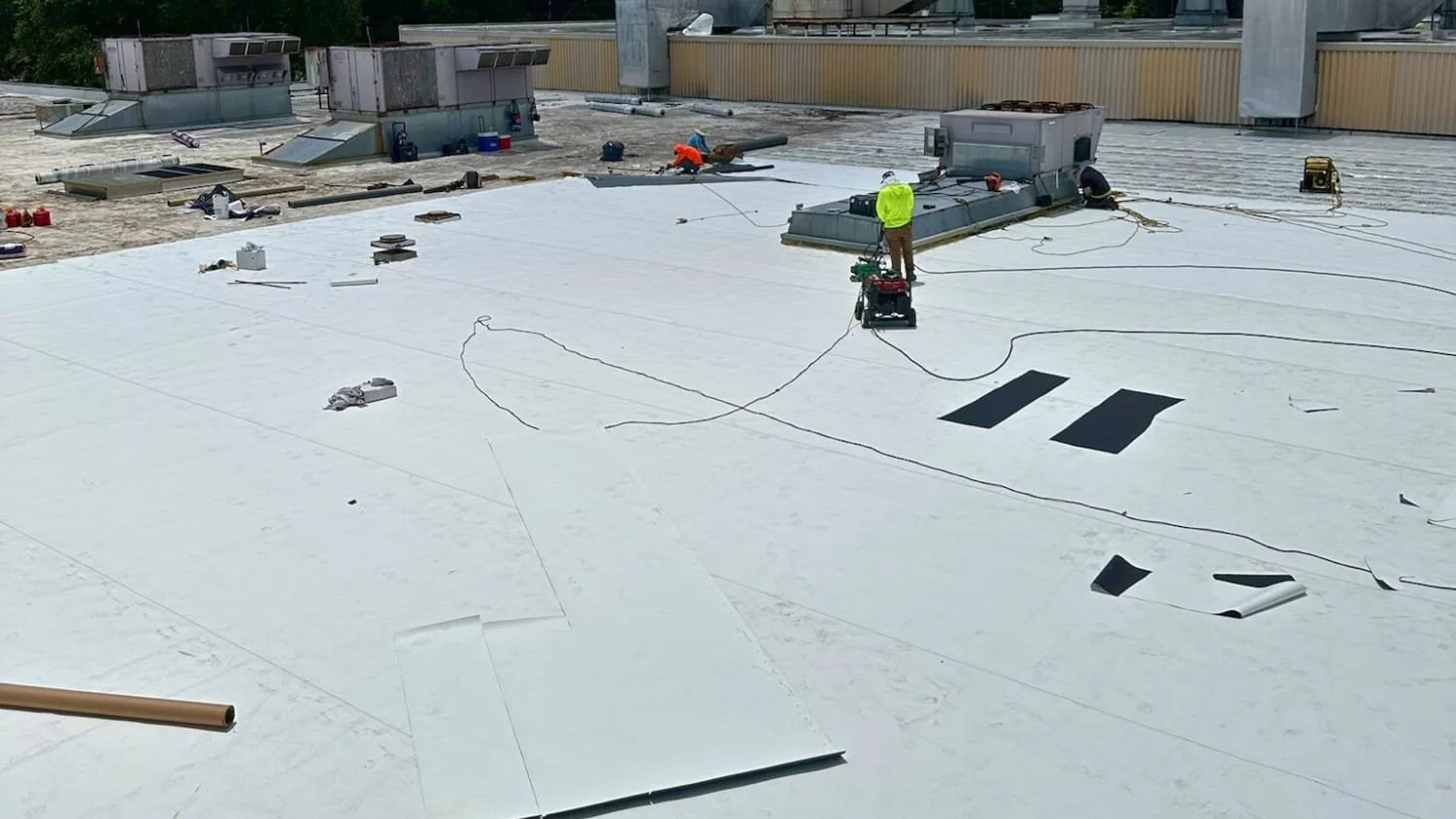
Restaurants almost never close for roofing work, and Akron QSR franchises are no exception. The daily revenue from a fast-food restaurant running 16 hours per day far exceeds the cost of any single day's roofing labor, and franchise operators who need to continue making royalty payments cannot afford the revenue interruption of a planned closure. Akron roofing contractors who work on occupied restaurant buildings develop sequencing plans that allow roofing work directly above the kitchen during hours when the kitchen is not operating — typically the early morning hours between midnight and 6 AM when some crews can work around the brief window before breakfast service begins, or by section-sequencing work to avoid any open joint directly above active cooking equipment.
Older restaurant buildings in Akron's commercial neighborhoods often have roofs with multiple generations of previous patchwork, irregular penetration locations, and non-standard details accumulated over decades of ownership changes. A thorough pre-project condition assessment — including moisture testing of the existing insulation, documentation of all penetration locations, and evaluation of the deck condition — is essential before bidding a re-roofing project on any Akron restaurant that has been operating for more than 15 years without a documented roof replacement. Surprises discovered after project start create cost disputes and schedule problems that benefit no one.
- Why do restaurant roofs fail near kitchen exhaust penetrations?
- Grease-laden exhaust vapor deposits on the membrane around Type I hood exhaust collars, degrading standard TPO and EPDM chemistry over time. The solution is grease-resistant membrane material in the contaminated zone, raised collar flashings, and more frequent inspection near exhaust discharge points.
- How are Type I hood exhaust collars properly flashed on Akron restaurant roofs?
- The collar must be raised above the membrane surface to prevent water entry into the duct, the flashing must accommodate thermal movement, and grease-resistant cover sheet or membrane must surround the collar. This is a specialized detail that standard pipe boot installation does not address adequately.
- Do restaurants in Akron actually need to stay open during roofing work?
- Almost always yes. Franchise operators have royalty obligations and fixed costs that make closure extremely costly. Experienced contractors sequence work during off-hours and avoid open joints directly above active cooking equipment during service periods.
- What is a grease trap vent stack and why does it matter for roofing?
- Grease trap vents are plumbing penetrations that exit through the roof away from the main kitchen exhaust. They require the same grease-resistant flashing treatment as other kitchen penetrations and are commonly missed during re-roofing scope inventories by contractors without restaurant-specific experience.
- How should drive-through restaurant drainage be designed in Akron's climate?
- Coordinate rooftop drainage discharge with drive-through lane drainage to prevent combined flooding during heavy rain events. In winter, avoid discharging roof drainage across drive-through pavement where it can create ice hazards in high-traffic vehicle paths.