
Skylight and Penetration Flashing in Akron, OH for Akron commercial properties
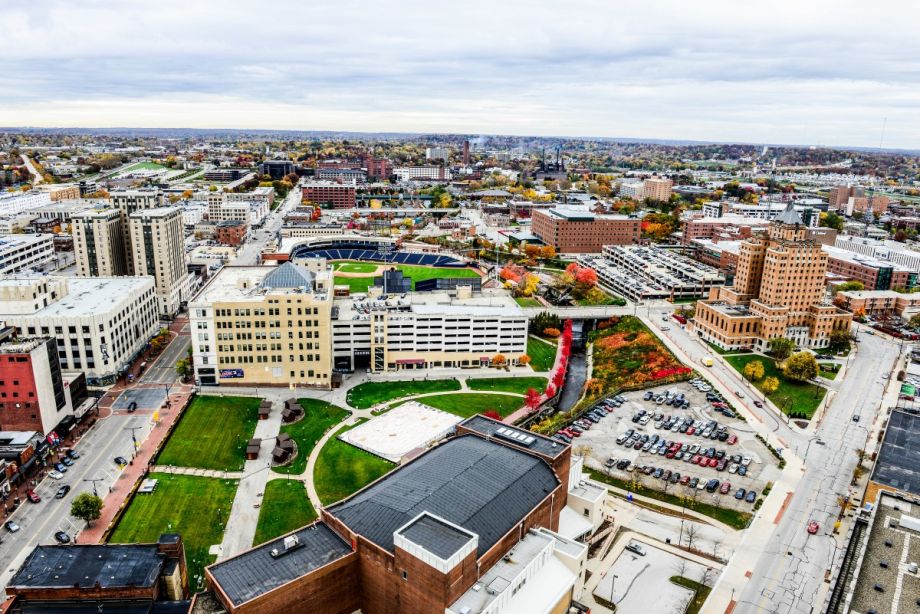
Penetration density is the first variable that separates a simple commercial roofing project from a complex one, and by that measure the University of Akron's polymer science and engineering buildings and the Bounce Innovation Hub represent some of the most demanding commercial roofing environments in northeast Ohio. Research laboratories require mechanical exhaust systems for fume hood ventilation, analytical instrumentation exhaust, compressed gas venting, and specialized research equipment with custom roof penetrations that were added incrementally over the building's life. The National Polymer Innovation Center — designed to support the full research-to-commercialization pipeline of Akron's polymer industry — carries the exhaust infrastructure of an active industrial operation layered onto an academic building envelope, and every one of those penetrations is a flashing condition that must perform perfectly to keep weather out of the building.
Freeze-thaw flashing failure is the dominant failure mechanism for penetration and skylight flashings in Akron's climate. The mechanics are consistent across penetration types: water infiltrates a flashing lap, joint, or termination during rain or snowmelt; that water freezes overnight; ice expansion forces the flashing element slightly further open; the ice melts; and the flashing is now marginally more open than it was before the event. Over months of winter cycling — and Akron's climate can produce dozens of these cycles between November and March — what began as a hairline crack in a caulk joint or a 2-millimeter lap gap becomes a functional opening that admits measurable water. The time to address these marginal conditions is fall, before the winter cycling begins, not spring after the damage is done.
Historic Cascade Plaza and the Akron Civic Theatre present skylight and penetration flashing challenges that are unique to mid-20th century institutional construction. Cascade Plaza — the modernist commercial complex that defined downtown Akron's commercial core — has signature architectural skylights and roof-level glazing that integrate with the building's structural expression. These are not standard commercial curb-mount skylights with adjustable base dimensions; they are custom architectural elements that require careful custom fabrication for replacement flashing details, attention to water management at the glazing-to-roofing transition, and in some cases consultation with original construction documentation to understand the designed waterproofing sequence. Our crews have worked on complex architectural skylight flashing conditions in Akron's downtown historic district and carry the custom sheet metal fabrication capability to match original profiles where standard components do not exist.
The Bowery District's converted industrial buildings represent a different historic skylight challenge: sawtooth industrial skylights from the early manufacturing era, now incorporated into commercial entertainment, restaurant, and retail spaces. These skylights were originally designed for north-facing daylighting in factory environments — their waterproofing was accomplished through lapping and counter-lapping of corrugated metal with minimal sealant. Converting these buildings to occupied commercial uses with water-sensitive interior finishes has required retrofitting waterproof flashings to skylight conditions that were never designed for zero leakage. We approach these historic conversions as custom fabrication projects, developing new flashing details that work within the existing structural geometry while meeting modern waterproofing performance standards.
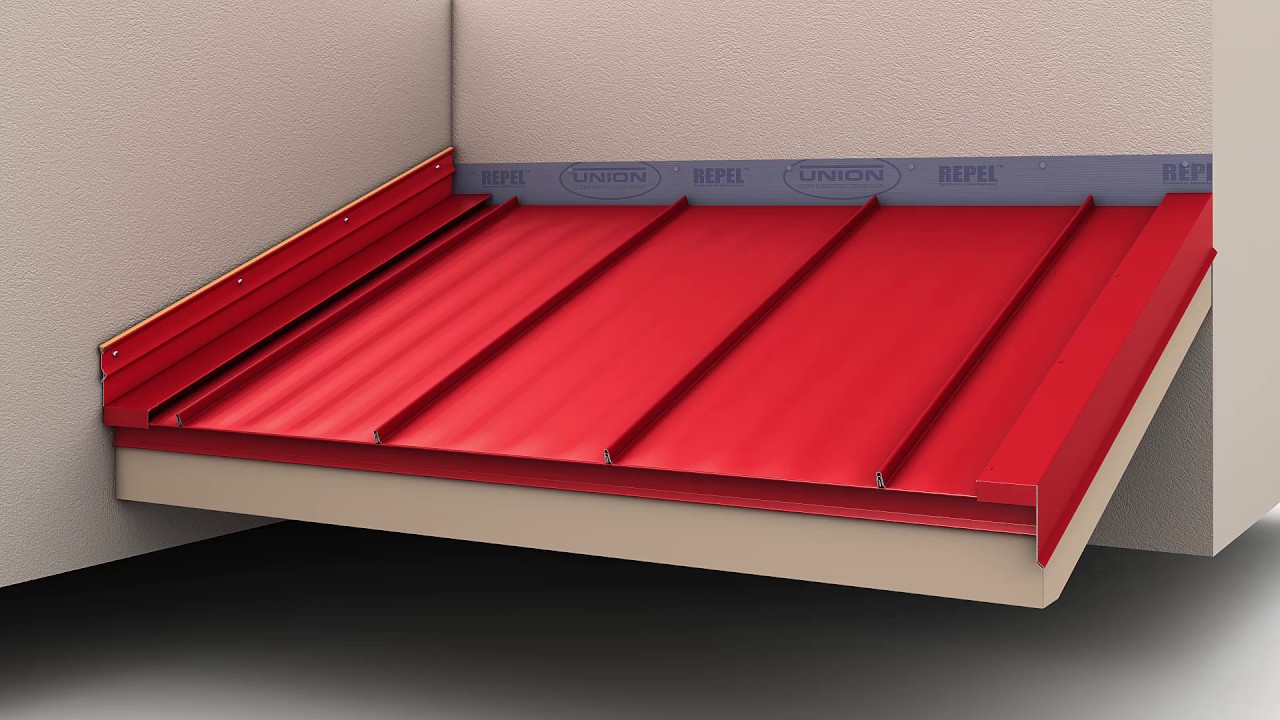
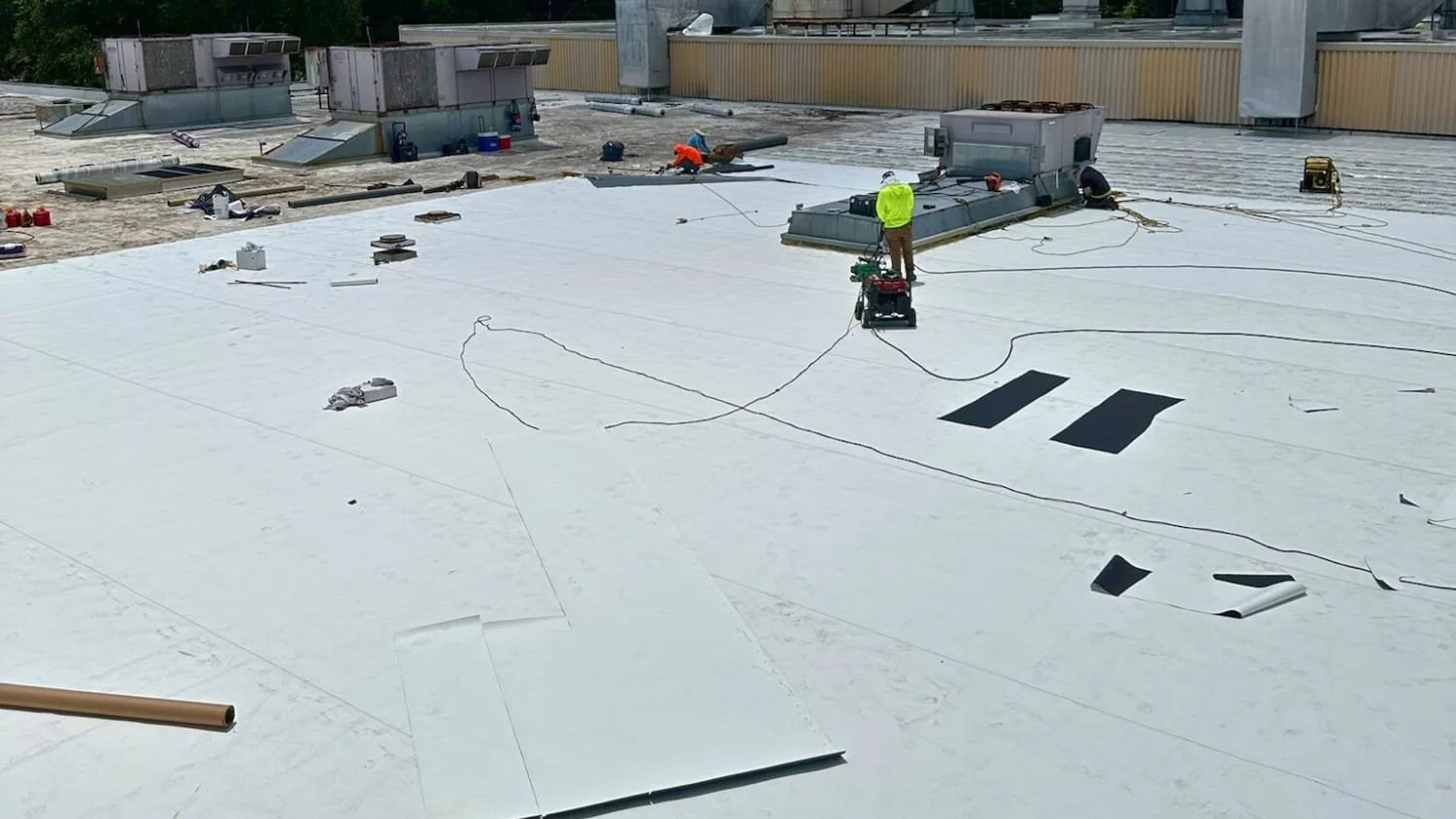
HVAC curb flashing is the highest-volume penetration flashing condition on Akron's commercial buildings, and it is also among the most commonly deficient on older rooftops. Standard commercial HVAC curbs are 18 to 24 inches tall sheet metal enclosures that raise rooftop equipment above the membrane surface for drainage clearance and maintenance access. The base flashing at the bottom of the curb — where the membrane turns up and terminates against the curb wall — is the critical waterproofing transition. On older EPDM and modified bitumen systems, this flashing is often a layered patchwork of previous repair attempts that has lost cohesion and lifts slightly with every seasonal temperature swing. During reroofing projects, we replace HVAC curb base flashing comprehensively as part of the standard project scope — not as an add-on. Leaving existing curb flashing in place while installing new field membrane creates a mismatch that consistently develops leaks within the first season.
Pipe penetration flashing — the boot flashings and pitch pans that seal gas pipes, electrical conduit, drain lines, and mechanical penetrations through commercial rooftops — is the most time-intensive per-square-foot flashing scope on high-density buildings. A research lab building may have 60 to 100 individual pipe penetrations; each must be individually assessed, flashed, or re-flashed during a reroofing project. We photograph and record every penetration condition before disturbing any existing flashing, and we provide the building owner with a complete penetration inventory as part of the project documentation — a record that is often the first time the building owner has ever had a comprehensive list of what penetrates their roof. That inventory supports future maintenance planning and is valuable context for any future roofing project.
Skylight replacement and upgrade is often appropriate when a reroofing project exposes the condition of existing curb-mount skylights. Skylights more than 20 years old typically have polycarbonate or acrylic glazing that has yellowed, crazed, or lost significant light transmission from UV exposure. The seals between glazing panels and the curb frame have degraded, and the curb itself may have settled or shifted from the original roofing substrate removal. Replacing the skylight unit — glazing and curb — during a reroofing project is more cost-effective than doing it separately before or after the roof work, since the curb-to-deck connection and curb flashing integration are at the same state of disturbance. We provide skylight replacement as a project scope item for qualifying units and source commercial-grade replacement units with current impact and thermal performance ratings appropriate to Ohio's climate zone.
Roof hatches and access doors are a sub-category of penetration flashing that is frequently neglected in maintenance programs. Commercial roof hatches have factory-installed gaskets and hardware that wear over time — the gasket compresses, the hatch latch mechanism loosens, and the hatch can be moved slightly off-plane by repeated use and thermal cycling, creating a flashing gap at the hatch-to-curb interface. We include roof hatch condition in every penetration inspection and reseal or replace hatch flashings when they show the marginal conditions that develop over years of Akron's thermal cycling.
Questions Owners Ask
How often should penetration flashings be inspected in Akron's climate?
Twice annually is the minimum — spring post-freeze and fall pre-freeze inspections specifically target the freeze-thaw damage that is the primary failure mechanism for penetration flashings in this climate. High-penetration-density buildings — research labs, medical facilities, restaurants with multiple exhaust stacks — warrant additional attention because the probability of a condition developing between scheduled inspections increases with the number of individual flashing conditions present. After any major storm event with high winds or significant hail, penetration flashings should be spot-checked regardless of the regular inspection schedule.
What is the difference between a flashing repair and a flashing replacement?
Flashing repair — caulk, seam tape, or mastic over an existing condition — is appropriate when the underlying flashing substrate is sound and the failure is at the sealant or termination edge. Flashing replacement — removing the existing base flashing and installing new material from the deck up — is appropriate when the substrate itself (the HVAC curb flashing, the pipe boot, or the base sheet) has failed mechanically or when the existing material is too deteriorated to hold new sealant reliably. In Akron's climate, flashings on buildings older than 15 years that have not been replaced should be evaluated for replacement rather than repair, because repair adhesion on aged, freeze-thaw-compromised substrates is often short-lived.
My building has a historic skylight that leaks. Can it be repaired without replacing the entire unit?
Often yes — historic skylight leaks are frequently at the glazing panel joints, perimeter gaskets, or curb-to-roof interface, all of which can be repaired without removing the skylight structure. We assess historic skylights for their structural and waterproofing condition separately: if the frame and curb structure are sound, targeted waterproofing repairs at the joints and membrane interface can restore performance at a fraction of replacement cost. If the frame has corroded significantly, the glazing has deteriorated, or the curb has settled beyond the level where waterproofing repairs can be reliable, replacement with a period-appropriate modern unit is the responsible recommendation.
Why do pipes that penetrate my roof seem to leak more in winter than summer?
Pipe penetration leaks that worsen in winter are classic freeze-thaw flashing failures. The pipe and its boot flashing go through different thermal cycles than the surrounding membrane — the pipe conducts heat from interior spaces, creating a differential expansion pattern at the pipe-to-boot-to-membrane transition that works the seal open more rapidly than a static penetration would. Additionally, water that accumulates around pipe bases in snow or ice events has a direct path to the flashing termination. Applying a fresh bead of appropriate sealant at the pipe boot termination edge in fall, as part of routine maintenance, is the single most effective preventive action for this failure mode.
Does skylight replacement require a building permit in Akron?
Commercial skylight replacement that maintains the original opening size and structural configuration typically does not require a building permit in most Summit County jurisdictions, but modification of the opening size, addition of new penetrations, or installation of new skylights in locations that previously had none does require a permit. We verify the applicable jurisdiction's requirements — City of Akron, Cuyahoga Falls, Fairlawn, Green, etc. — for each project and pull permits when required. Skylights have specific energy code requirements for thermal performance (U-factor and Solar Heat Gain Coefficient) in Climate Zone 5, and replacement units must comply with those requirements regardless of permit status.