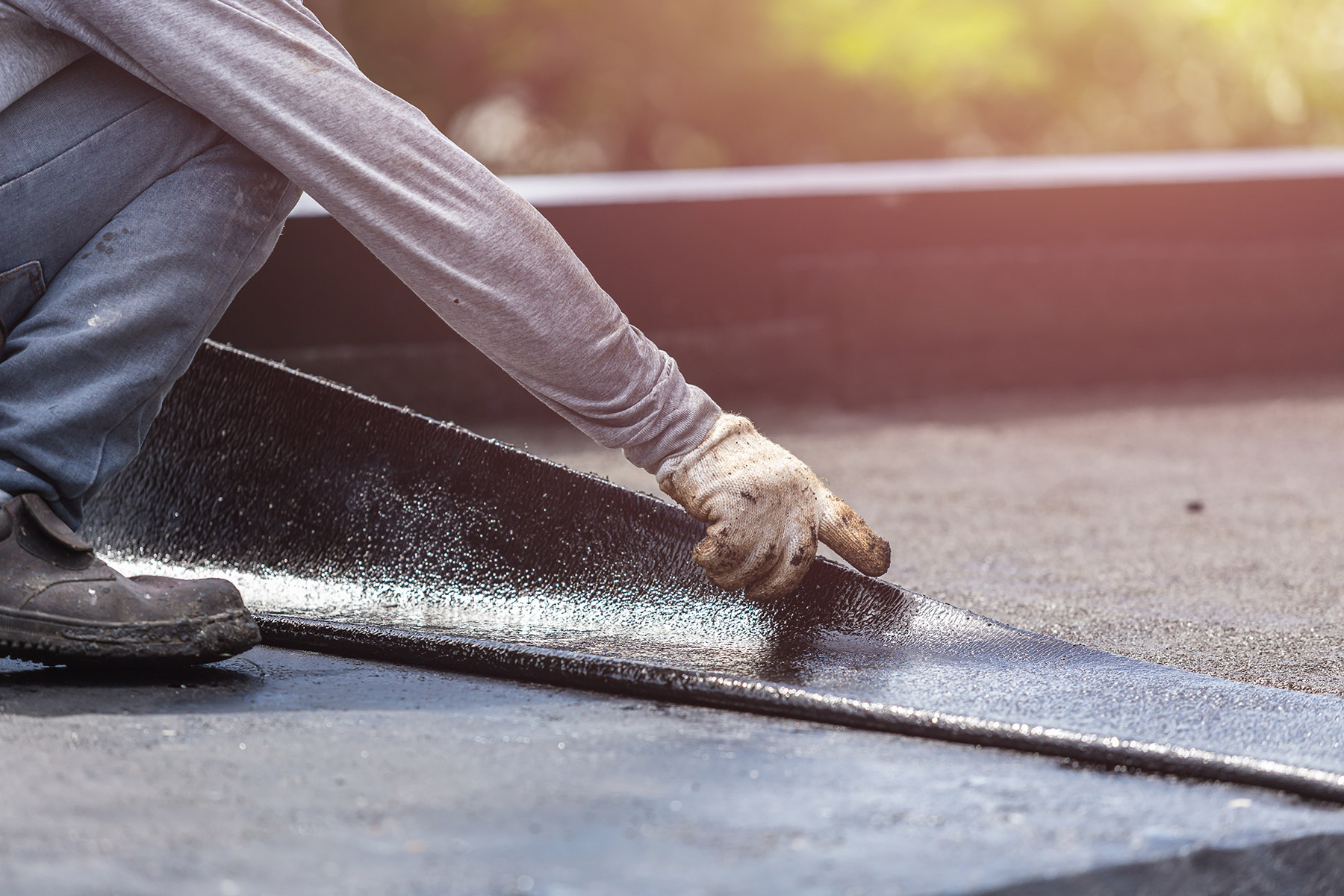
EPDM Roofing in Akron, OH for Akron commercial properties
EPDM — ethylene propylene diene monomer — has a connection to Akron that no other roofing membrane can claim. The city's century-long identity as the center of American rubber and polymer chemistry, set on the industrial foundations of Goodyear, Firestone, and BFGoodrich, created in northeast Ohio a contractor base, an engineering community, and a building industry that understands elastomeric materials at a level of institutional depth that is genuinely rare. When roofing contractors in Akron work with EPDM, they are working with a material in its home territory — and the installed base of EPDM on Goodyear Heights, Firestone Park, and Kenmore Boulevard commercial and industrial buildings reflects decades of confident specification decisions backed by local chemical expertise.
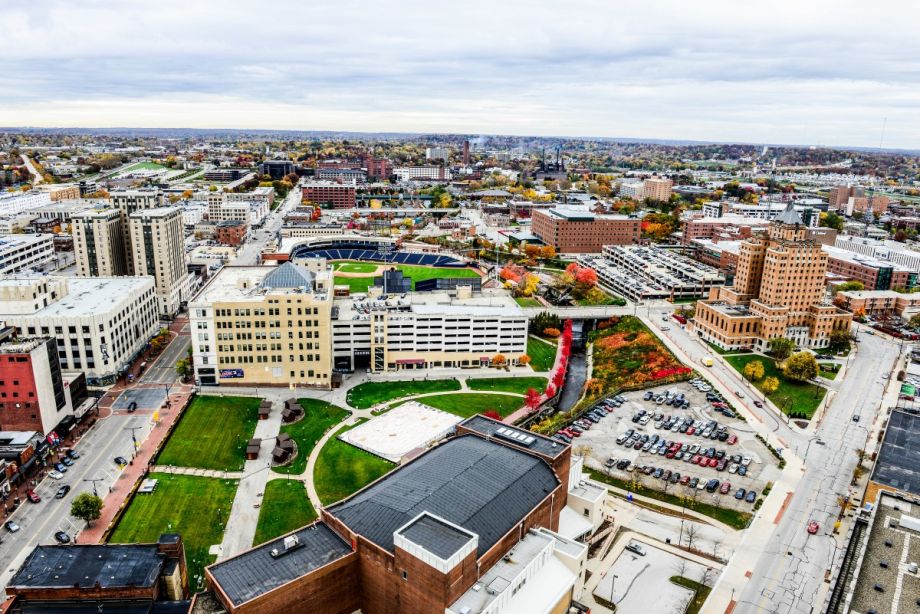
The Akron EPDM stock is substantial. The commercial and industrial buildings that line Kenmore Boulevard, fill the blocks of Goodyear Heights, and line up along the industrial corridors off I- have been reroofed in EPDM in waves since the 1980s, when EPDM first became a dominant commercial specification in northeast Ohio. Many of these buildings now carry EPDM systems that are 20 to 30 years old — well past their design warranty period, surviving on accumulated resilience and periodic repairs, but approaching the point where the economics of continued patching no longer pencil against a full re-roof. Identifying the right buildings for recovery versus replacement — and understanding the specific failure patterns of aged Akron EPDM systems — is a core part of our service offering for these neighborhoods.
Freeze-thaw performance is the most important EPDM specification factor in Akron's climate, and it is where EPDM's material chemistry creates both its greatest advantage and its most common failure mode. EPDM maintains flexibility at temperatures well below freezing — it does not become brittle and crack under thermal shock the way aged APP-modified bitumen or oxidized asphalt felts do. The field membrane of a properly installed EPDM system handles Akron's freeze-thaw cycling well. The failure point is the seams. Lap seams in EPDM systems rely on contact adhesive or seam tape to maintain adhesion across the thermal cycling range, and these adhesive bonds are more vulnerable to freeze-thaw stress than the membrane itself. In Akron's climate, seam integrity is the primary inspection target on any EPDM system older than 10 years.
Ballasted EPDM — where the single-ply membrane is laid loosely and held in place by river-washed stone ballast — was a common specification in northeast Ohio during the 1980s and early 1990s, particularly on the industrial buildings in Akron's manufacturing corridors. Ballasted systems have specific vulnerabilities in this climate: the ballast stone displaces under repeated freeze-thaw cycles and wind events, creating areas where the membrane is exposed and subject to UV degradation; ballast also significantly increases roof dead load, which must be considered when evaluating a reroofing project on buildings where structural capacity is a consideration. When we assess a ballasted EPDM system, we document ballast coverage and displacement patterns as part of the condition assessment.
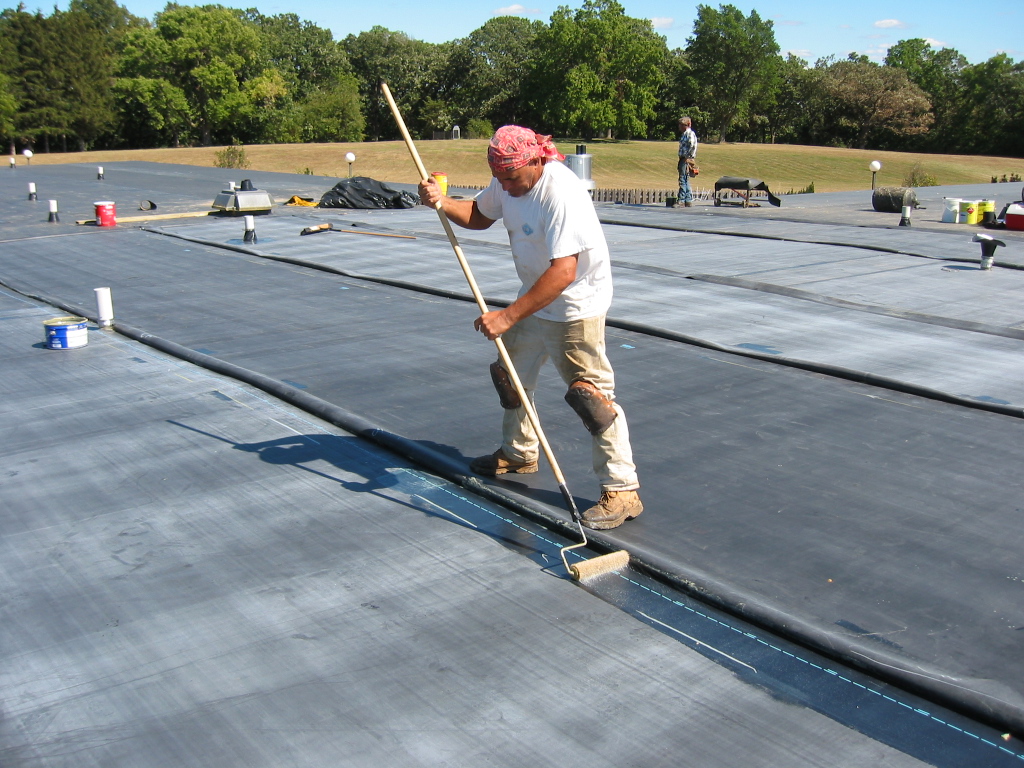
Mechanically attached and fully adhered EPDM systems are the current standard specifications for Akron commercial roofing. Mechanically attached EPDM — secured with fastener rows through the membrane into the deck, with seams overlapping the fastener rows — provides good wind-uplift resistance and is the most common new-construction specification for industrial and warehouse buildings in Summit County. Fully adhered EPDM, bonded to the insulation surface with contact adhesive, provides better resistance to membrane billowing in high-wind events and is preferred for rooftop areas with significant equipment or foot traffic. System selection depends on the specific building, substrate, and exposure conditions.
University of Akron facilities — where EPDM has been specified on several campus buildings — present a maintenance challenge specific to academic environments: high foot traffic from facilities and research maintenance personnel who access rooftops to service lab equipment, HVAC, and research-specific installations. EPDM is relatively vulnerable to puncture from sharp tools, equipment feet, and improper walking surface materials. We install protection board walkways on UA building rooftops as part of any EPDM reroofing project and include rooftop access protocol documentation in our project closeout packages for the university facilities management team.
EPDM repair is one of the most field-serviceable repairs in commercial roofing. Punctures, split seams, and lap adhesion failures can be repaired with properly primed EPDM cover strips and seam tape without requiring hot equipment, open flame, or complex surface preparation. This repairability is a significant practical advantage for buildings in Akron that have emergency repair needs in winter conditions when torch-applied repairs are impractical or unsafe. Our service crews carry EPDM repair materials on all service vehicles and can execute most field repairs within an hour of arrival on-site.
The specification question of 45-mil versus 60-mil EPDM is worth addressing directly for Akron's climate and building stock. The thinner 45-mil membrane has been the industry default for decades and performs adequately in most applications. For buildings in Akron with heavy rooftop traffic, high penetration density, or located in areas with significant hail exposure — the Fairlawn-Bath corridor and CAK airport area are most exposed to northeast Ohio's severe thunderstorm hail events — 60-mil EPDM provides meaningful additional puncture and impact resistance that reduces the frequency of damage-related repairs over the system's service life. We typically specify 60-mil for any new installation in Summit County and clearly note the incremental cost difference in our proposals.
Questions Owners Ask
My existing EPDM roof is 25 years old but hasn't leaked. Does it need to be replaced?
Age alone does not mandate replacement — performance history and current condition do. A 25-year-old EPDM system with no active leaks and sound seams may have significant remaining service life, particularly if it has been consistently maintained and drain-cleared. We assess aged EPDM systems with infrared moisture scanning, seam pull-testing, and visual inspection to give you a specific remaining life estimate rather than a generic age-based recommendation. Some 25-year-old Akron EPDM systems have been extended another 10 years with targeted seam repairs and a silicone overcoat.
Can EPDM be installed in Akron's winter?
EPDM installation is temperature-limited by its adhesive system. Contact adhesive for fully adhered systems requires substrate temperatures above 40°F for proper bonding, and seam adhesive and tape has similar temperature requirements. Mechanically attached EPDM can be installed in colder conditions since seam tape and splice adhesive are the only temperature-sensitive components. Cold-temperature emergency repairs using specifically formulated cold-weather seam tape and cover strips are possible down to approximately 20°F. Full system installation in sub-freezing conditions is not recommended.
What's the difference between EPDM and TPO for an Akron industrial building?
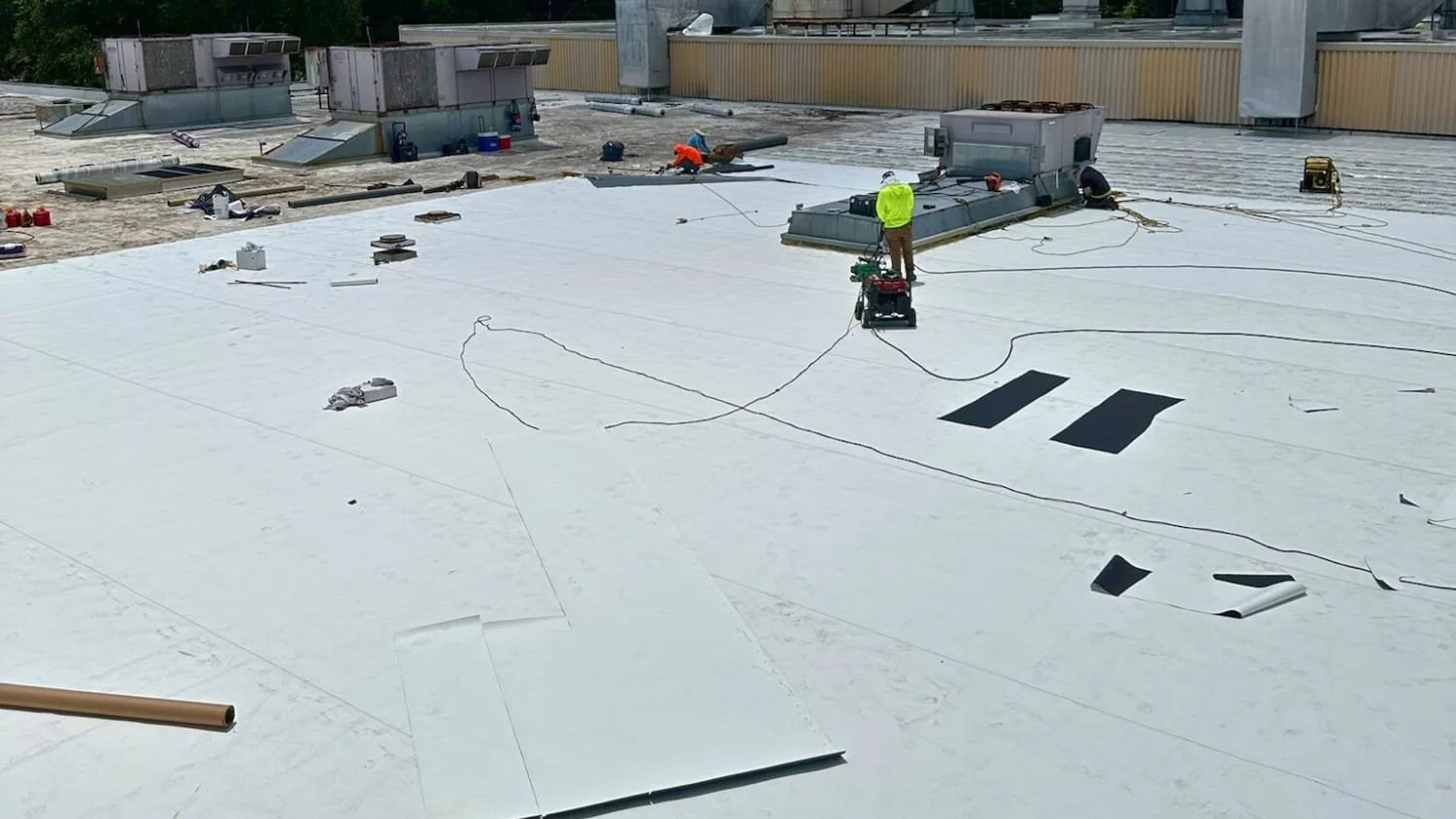
EPDM and TPO are both viable single-ply specifications for Akron industrial buildings. EPDM's main advantage is its long track record, excellent flexibility in cold temperatures, and repairability with simple materials. TPO's main advantage is factory-welded seams that provide superior seam integrity over time and white reflectivity for energy performance. EPDM is typically black (unless painted or coated) and carries a higher thermal cycling penalty on the membrane surface. For a new Akron industrial building, we more often specify 60-mil TPO with heat-welded seams; for a recover or coating project on an existing EPDM system, preserving the existing membrane makes economic sense if it passes condition assessment.
What causes EPDM seams to fail on older Akron buildings?
Seam failure on older EPDM systems has two primary causes: adhesive degradation from age and UV exposure, and thermal cycling fatigue. The contact adhesive used in EPDM laps from the 1980s and 1990s was solvent-based and degrades over time, losing its bond strength before the field membrane itself shows significant deterioration. Freeze-thaw cycling in Akron's climate accelerates this process by working the seam edge through repeated expansion and contraction. Seam failures are almost always repairable with proper cleaning, primer application, and new seam tape or cover strip material — replacement is rarely required for isolated seam failures.
Is EPDM suitable for a building that handles rubber or polymer materials?
EPDM has good resistance to many of the chemicals found in Akron's polymer and rubber manufacturing facilities, but compatibility depends on the specific chemical exposure. Some rubber processing oils and solvents can attack EPDM at the seams or penetration flashings even when the field membrane is unaffected. For buildings with rooftop chemical exposure from exhaust or equipment, we evaluate the specific chemistry involved and may recommend an PVC or KEE membrane instead, which has broader chemical resistance. EPDM should not be assumed chemically compatible for all Akron industrial applications without a specific compatibility review.