

Funeral Home & Mortuary Roofing for Akron commercial properties
A funeral home cannot have a bad roofing day in front of a family. There is no offstage, no slow afternoon to make noise in, no acceptable moment for a tarp to be flapping over the front entrance during a service. That is the whole challenge of this building type, and it is why we approach funeral home roofs in Akron more like hospital work than commercial work: quietly, on the facility's terms, with the building looking composed from the street the entire time.
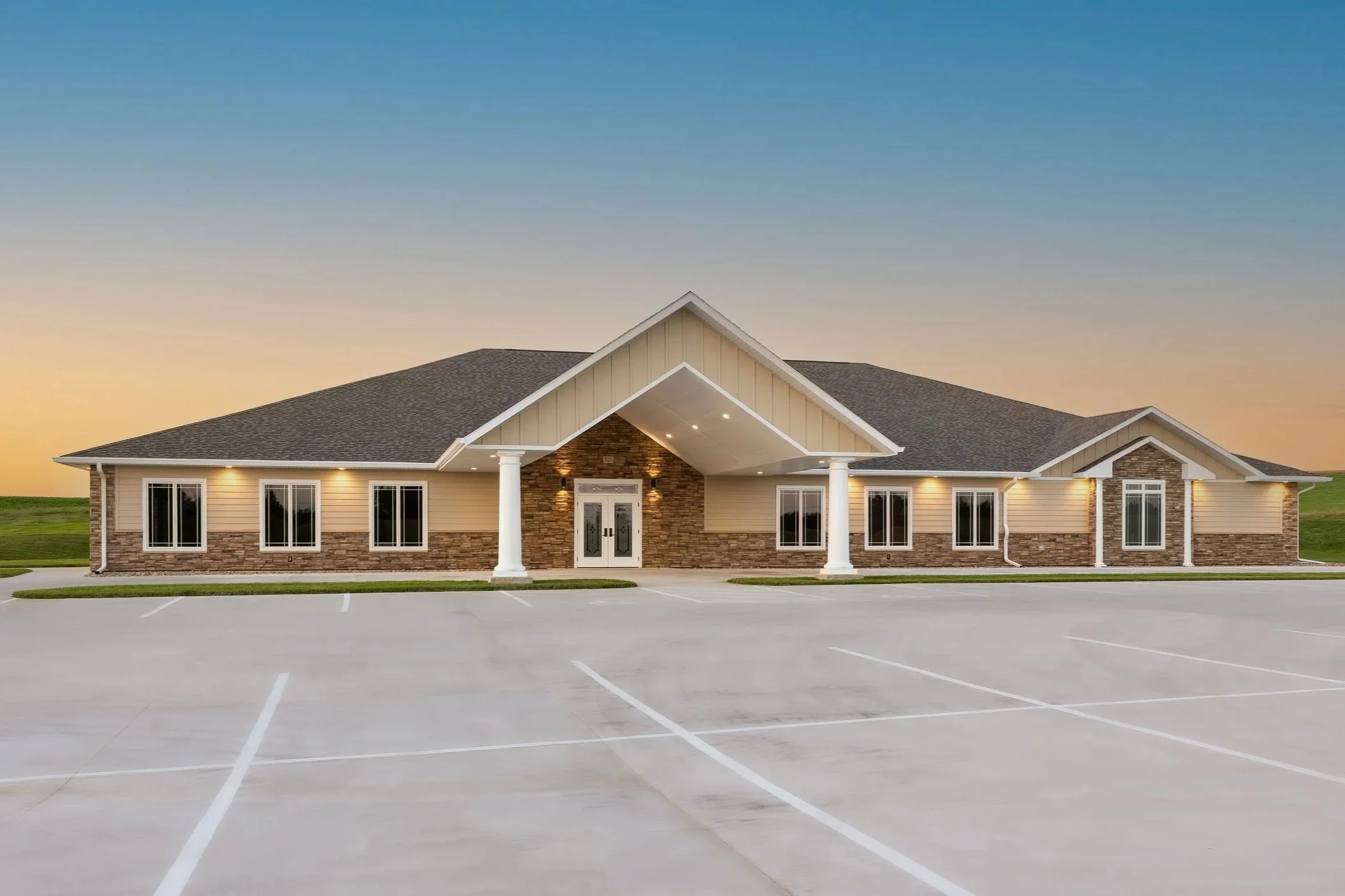
Akron's funeral homes are woven into established neighborhoods rather than tucked into industrial parks. The long-standing family firms and chapels along West Market Street and through Highland Square, the homes serving the Firestone Park and Goodyear Heights communities, and the regional and chain-owned facilities across the suburbs all sit on visible corner lots where the building's appearance is part of how it serves the community. A reroof here happens in full view of the people who matter most to the business.
Quiet scheduling is the entire job
Everything starts with the funeral director's calendar. We get the week's services and visitations in advance and sequence the work around them, so crews, noise, and equipment are clear of the building during a service and the active chapel and entry areas stay undisturbed. There is no grinding overhead while a family is gathered. We hold the loud work to open windows in the schedule, keep the front of the building presentable, and confirm a watertight dry-in before the home closes each evening so nothing is left exposed for an evening visitation or an overnight Ohio storm.
A dignified appearance, start to finish
On most commercial sites a little jobsite clutter is normal. On a funeral home it is not acceptable. We stage materials and the dumpster out of sight of the entrance and the family parking, keep the grounds clean as we go, and run a tidy operation that does not read as a construction zone to arriving families. The porte-cochere and covered entry get particular care, since that canopy is the first thing every family passes under and is also one of the most common chronic leak points on these buildings. We treat its flashing and drainage as their own scope item and keep it looking right while we work it.
- Chapel and visitation roofs, often clear-span and worship-style
- Porte-cochere and covered entry canopy, the building's most-seen and most leak-prone area
- Preparation-room exhaust stack, which has to keep running throughout
- Older built-up assemblies on wood or concrete decks common in Akron's established districts
The preparation-room exhaust cannot go offline
The embalming and preparation area runs under negative pressure with a rooftop exhaust that vents formaldehyde and other chemical vapors, and that stack has to keep operating to stay within safety requirements. We locate it before mobilization, plan any flashing work around it as a separate, director-approved item, and keep the exhaust running while we work near it. It is never capped, blocked, or taken offline for our convenience, and we detail the stack flashing for the continuous moisture and chemistry coming out of it.
Chapel spans and what is hiding under old roofs
Chapel and visitation rooms often span forty to sixty feet without an interior column, the same clear-span, worship-style structure you find in a church sanctuary. Those spans flex under wind and snow load, so we identify the deck type and run the right fastening for the uplift before specifying a system. Many older Akron funeral homes also carry decades-old built-up roofing on wood or concrete decks, and a serviceable-looking surface can hide saturated insulation underneath. We core-cut and run a moisture survey before any recover decision, because sealing a new membrane over a wet deck on a building like this just buys a bigger problem later.
Family firms and corporate owners both
Some of these buildings are owned by multi-generation Akron families who have run them for decades; others are part of regional groups with facilities management at the corporate level. Both want the same thing from a roofer: someone who understands the scheduling, keeps the building dignified, respects the regulatory side, and works with the discretion a place like this requires. We bring the same care here that we bring to hospitals and houses of worship, because the building is doing serious work for people on their hardest days.
Funeral Home & Mortuary Roofing Questions
How do you keep roofing work from interrupting services?
We schedule around the funeral director's weekly calendar, getting services and visitations in advance and sequencing work so crews, noise, and equipment are clear of the building during a service. Loud work is held to open windows in the schedule, and we confirm a watertight dry-in before the home closes each evening.
Will the site look like a construction zone to families?
No. We stage materials and the dumpster out of sight of the entrance and family parking, keep the grounds clean as we go, and run a tidy operation. The porte-cochere — the first thing every family passes under — gets particular care and stays presentable throughout.
Can the preparation-room exhaust stay on during the work?
Yes, and it has to. The prep-room exhaust vents chemical vapors under negative pressure and must keep running for safety. We locate the stack before mobilization, plan flashing around it as a separate director-approved item, and never cap, block, or take it offline for our convenience.
Do you handle clear-span chapel roofs?
Yes. Chapel and visitation roofs are often clear-span, worship-style structures like a church sanctuary, so we identify the deck type and run the correct fastening for the wind and snow uplift before specifying a system, rather than borrowing a flat-warehouse pattern.
Our building is old — can you tell if the roof is wet underneath?
Yes. Many older Akron funeral homes have built-up roofing on wood or concrete decks where a fine-looking surface hides saturated insulation. We core-cut and run a moisture survey before any recover decision so we don't seal a new membrane over a wet deck and create a bigger problem down the road.