



Fitness Center & Gym Roofing for Akron commercial properties
A gym roof works harder than its square footage suggests
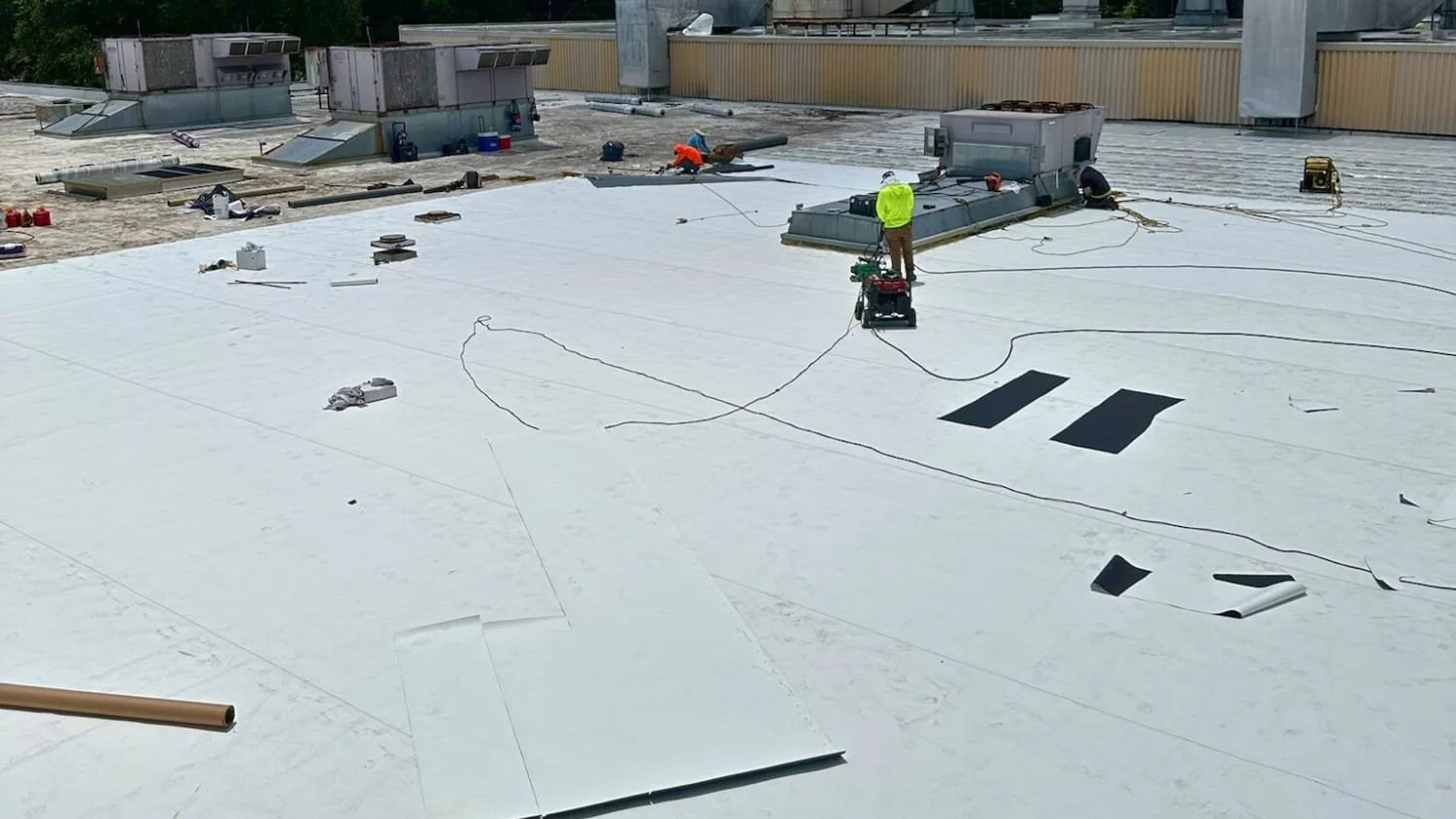
Walk into a packed group-fitness class on a January morning and you can feel the air change — heat, humidity, and CO2 climbing fast in a room full of people working out. All of that has to go somewhere, and on a fitness building it goes up through a roof carrying far more mechanical equipment than a retail box the same size. Across Akron, from the clubs along West Market Street in the Fairlawn and West Hill stretch to the storefront studios in the strip centers off Arlington Road and the recreation space tied to the University of Akron's campus, the gyms that stay dry are the ones whose roofs were specified for the load, not for the footprint.
The single biggest driver on a fitness roof is occupancy-based ventilation. A wide-open training floor needs high-volume air handling to keep air quality tolerable when the room is full. Each studio, the locker rooms, and any pool or steam area carry their own dedicated exhaust and supply. Count the curbs on a full-service health club and you'll routinely find two to three times the penetration density of an office building with the same roof area.
Where the moisture actually comes from
Owners tend to think about the membrane on top and forget the air underneath. Showers, whirlpools, steam rooms, and especially indoor pools push warm, wet air against the underside of the deck all day. In Akron's climate, that interior vapor wants to migrate up and condense inside the assembly every time the temperature outside drops. If the vapor retarder is missing or sitting in the wrong plane for our climate zone, that moisture gets trapped, soaks the insulation, and quietly kills its R-value over a few seasons — long before anything drips through the ceiling.
So on any club with a natatorium or wet area, we treat vapor control as part of the roof design, not a detail to sort out later. We open the existing assembly, confirm where the retarder is and whether it belongs there, and spec the reroof accordingly. For pool and steam buildings our preference is a fully adhered 60-mil TPO or PVC — adhered systems drop the fastener-penetration field that mechanical attachment creates and give a more vapor-tight assembly at the membrane. Dry-side buildings without pools do fine on 60-mil TPO mechanically attached at a lower cost.
Long clear spans and concentrated rooftop loads
A lot of gym space sits under long-span steel or open-web joists so the floor can stay column-free. Those spans flex more than a short-bay roof, and the big packaged rooftop units that serve them concentrate weight and vibration at specific points. We verify deck type, gauge, and span before we settle on a fastening pattern or insulation attachment — and where deflection is a real concern, we lean toward adhered or hybrid systems so we're not stacking fastener point-loads at the seams.
Scheduling around a building that's open at 5 AM
Plenty of Akron clubs run from before dawn until midnight, seven days a week, and the 24-hour formats never close at all. Roofing has to thread through opening hours, pool-chemical deliveries, and the HVAC service windows that keep an indoor-pool building inside Ohio's air-quality standards for public aquatic facilities. We build that sequencing into the proposal up front — start times, noise limits over occupied locker rooms, and daily watertight dry-in all spelled out before mobilization, not bolted on as change orders.
Working with chains and independents
National formats — Planet Fitness, LA Fitness, Crunch, Anytime Fitness, Life Time, and the rest — run their facilities through corporate facilities management and approved-vendor processes, and we work inside those frameworks. We also work directly with independent club owners and the real-estate investors who hold gym-anchored retail around Akron. Either way the closeout package is the same: permit and final inspection, manufacturer warranty registration, drain and flashing report, and a roof-zone diagram with a full penetration inventory for the asset file.
What a leak costs a gym, and why maintenance pays
A roof leak in a fitness building rarely lands somewhere harmless. The water finds the cardio deck with its banks of motorized equipment, the free-weight floor where members are underneath it, or the electrical and AV runs feeding a studio. Closing a room or roping off a section of floor isn't just an inconvenience at a club — it's the kind of thing that shows up in cancellation requests. That's why we push fitness owners toward a maintenance program rather than a wait-for-the-drip approach: two inspections a year, drains cleared, sealant and flashing checked at the dense penetration field, and small repairs handled before they migrate.
The humidity load makes that schedule more important here than on a dry building. Sealants and flashings around exhaust and make-up air curbs work harder over a pool or steam area, and they fatigue faster, so the inspection interval that's fine for an office isn't generous enough for a natatorium. We document the rooftop on every visit and flag what's trending so the owner can budget a repair on their timeline instead of scrambling for an emergency call during peak hours.
Questions Akron gym owners ask
How do you keep pool and locker-room humidity from wrecking the roof?
Interior vapor drive gets handled inside the assembly with a correctly placed vapor retarder for our climate zone — not just a tight membrane up top. We confirm the existing retarder position before specifying the reroof, because getting that plane wrong is what traps moisture and destroys insulation.
What membrane do you recommend for a club with a pool?
Fully adhered 60-mil TPO or PVC. Adhered systems remove the fastener field and create a more vapor-resistant assembly, which matters over a natatorium. Dry buildings can use mechanically attached 60-mil TPO at lower cost.
Can the work happen around extended or 24-hour hours?
Yes. We confirm work windows with your facilities team before mobilizing and issue a daily status so the manager knows each section is watertight before the next operating cycle. Start times and noise limits near occupied areas are documented in advance.
Is rooftop HVAC curb work included?
Yes. Every curb gets documented for size and clearance height before pricing. Undersized curbs — common on older gym buildings — are raised or replaced so the new membrane meets the manufacturer's warranty requirements.