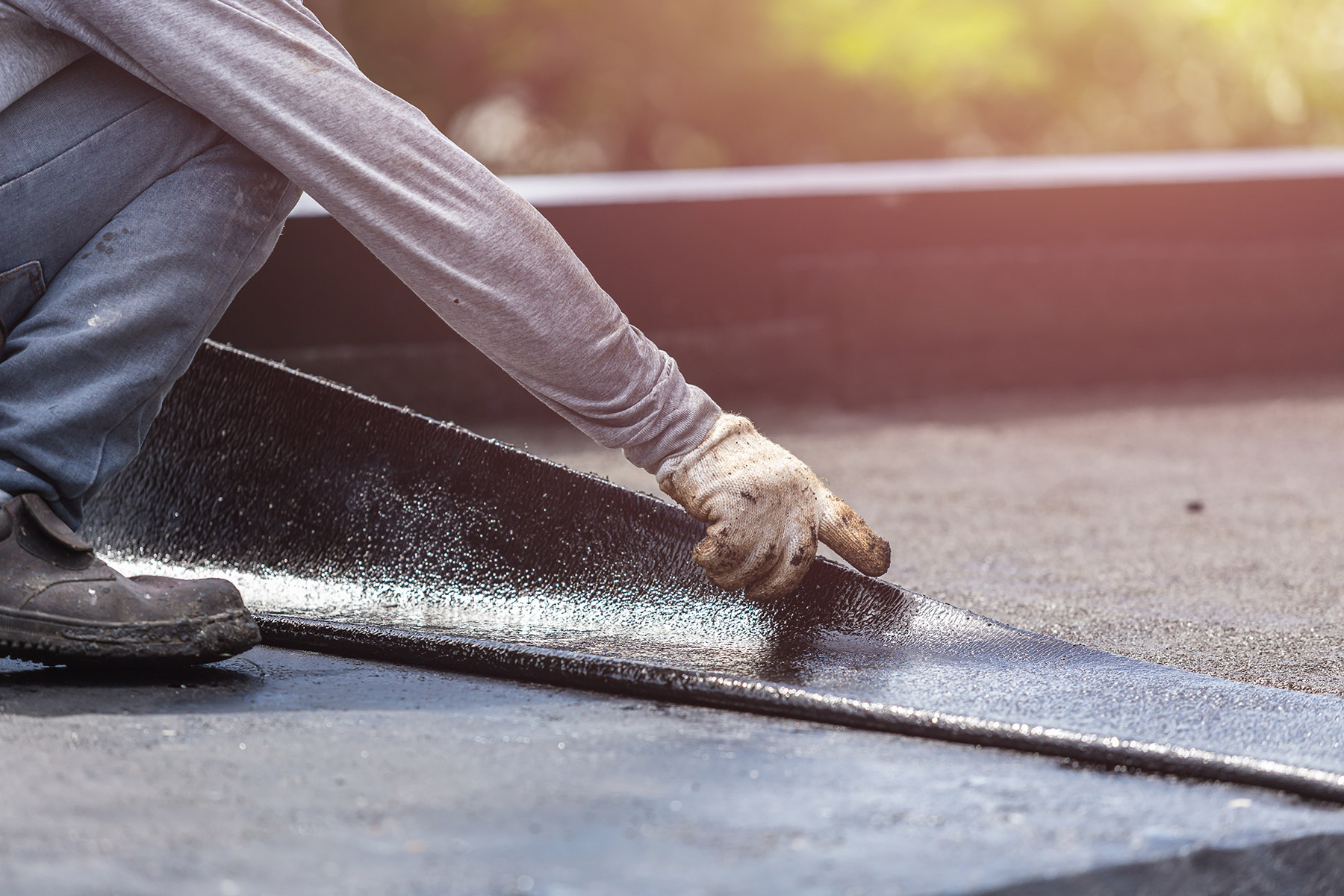
Event Venue & Convention Center Roofing for Akron commercial properties
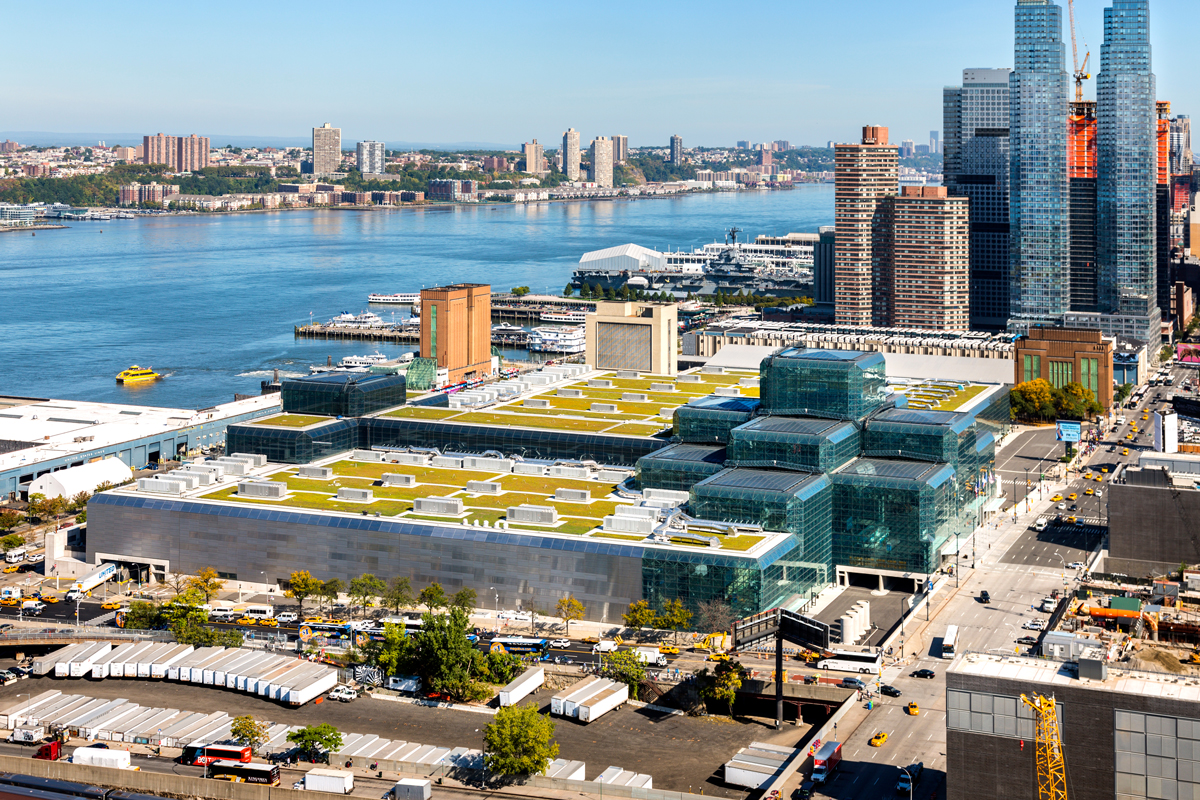
Convention centers and event venues in Akron are revenue engines, and roofing procurement decisions need to be evaluated on total cost of ownership — not on contract price alone. A re-roofing program that correctly phases work into available dark windows, maintains the facility's event calendar without interruption, and delivers a 20-year warranted system costs the facility less over 20 years than a cheaper program that misses an event milestone, causes a water damage claim during a conference, or fails at year 12 due to an uncertified installation. The math on total cost of ownership favors quality in venues more than in any other building type.
The asset position of a convention center or large event venue in Akron is directly tied to the condition of its roof. Lenders, investors, and potential buyers of convention facility assets evaluate roof condition as a capital expenditure liability item. A facility with a current, warranted roof system in documented condition is a different asset than one with a deferred maintenance situation — and the difference in valuation can exceed the cost of the roofing program. We provide the documentation package that lenders and asset managers need to confirm roof condition: inspection reports, warranty certificates, installation records.
Multi-year capital programs for convention center roofing in Akron allow large facilities to spread the investment across budget cycles while keeping the most critical roof sections current on warranty. A 200,000-square-foot convention center might complete its re-roofing program over three years — exhibit hall in Year 1, ballroom wing in Year 2, prefunction and support areas in Year 3 — with each completed section under NDL warranty from the day of installation. We develop multi-year capital programs with year-by-year scope, cost, and warranty status projections.
How we keep Event Venue & Convention Center Roofing practical
Before pricing Event Venue & Convention Center Roofing, we confirm the roof areas involved, where water is moving, how crews can access the roof, and which assumptions could change the budget after closer inspection. That keeps the recommendation tied to the building instead of a broad square-foot number.
For Akron commercial properties, we also separate immediate stabilization from long-term planning. Temporary dry-in, targeted repair, maintenance, coating, recover, and replacement can all be valid, but they should not be blended into one vague scope.
Event Venue & Convention Center Roofing properties need roof work that respects the people and operations below the roof. Entrances, parking, loading, patient areas, tenants, inventory, mechanical systems, and security procedures can all affect the work plan before materials are ordered.
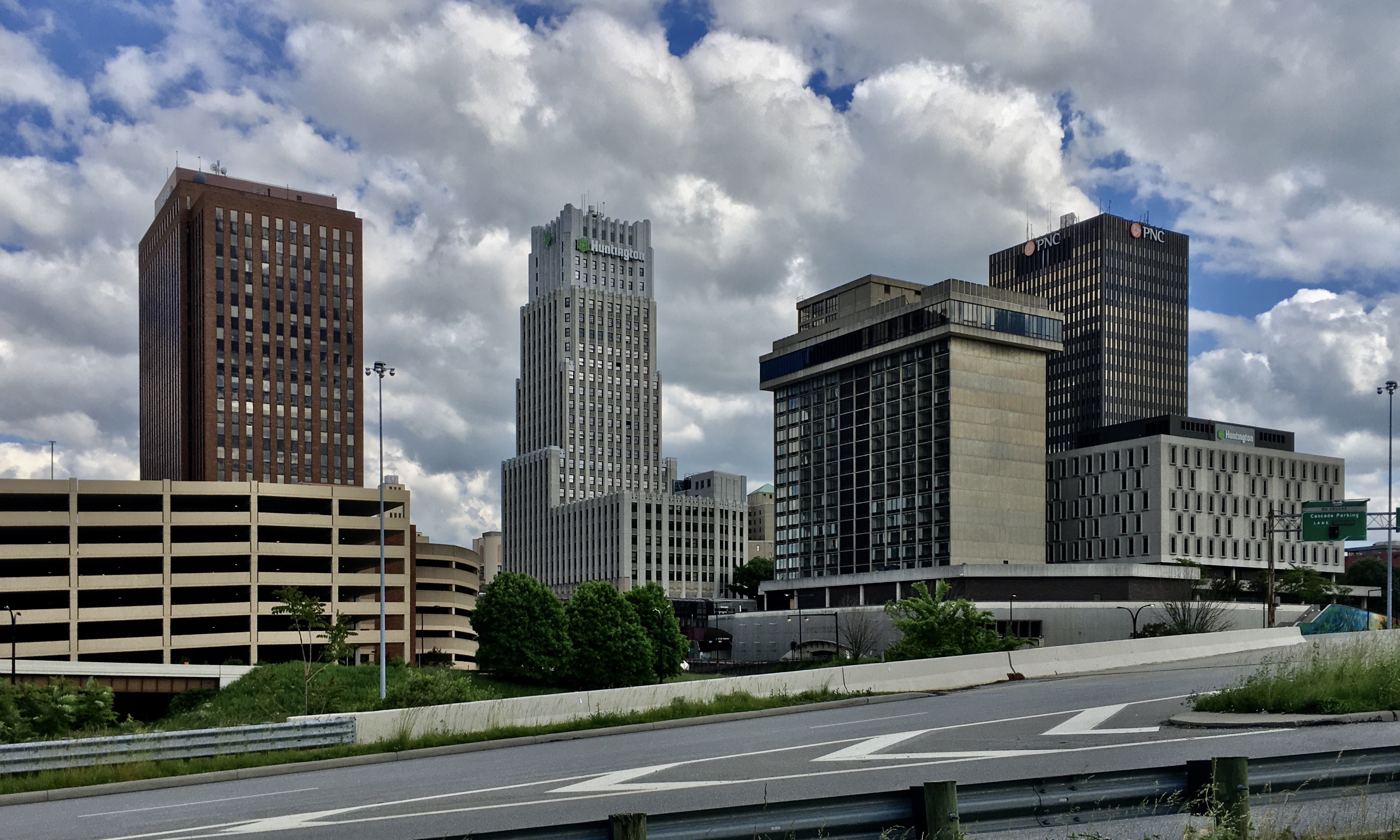
Access is reviewed early because it can change the whole project. Downtown Akron, medical campus buildings, university-area properties, retail centers, warehouses, and industrial facilities each create different rules for staging, lift use, parking, tenant notifications, safety zones, and after-hours work.
Weather is treated as a project constraint, not background information. Snow, freeze-thaw movement, hail, heavy rain, summer storms, and cold-weather close-in affect how much roof can be opened, how materials are stored, and when temporary protection has to be installed before the next work step.
Budget conversations stay more useful when the drivers are named. Wet insulation, deck repair, tapered insulation, drains, scuppers, coping, wall flashing, rooftop equipment, fall protection, material staging, disposal, and occupied-building sequencing can change cost and timing more than the roof label itself.
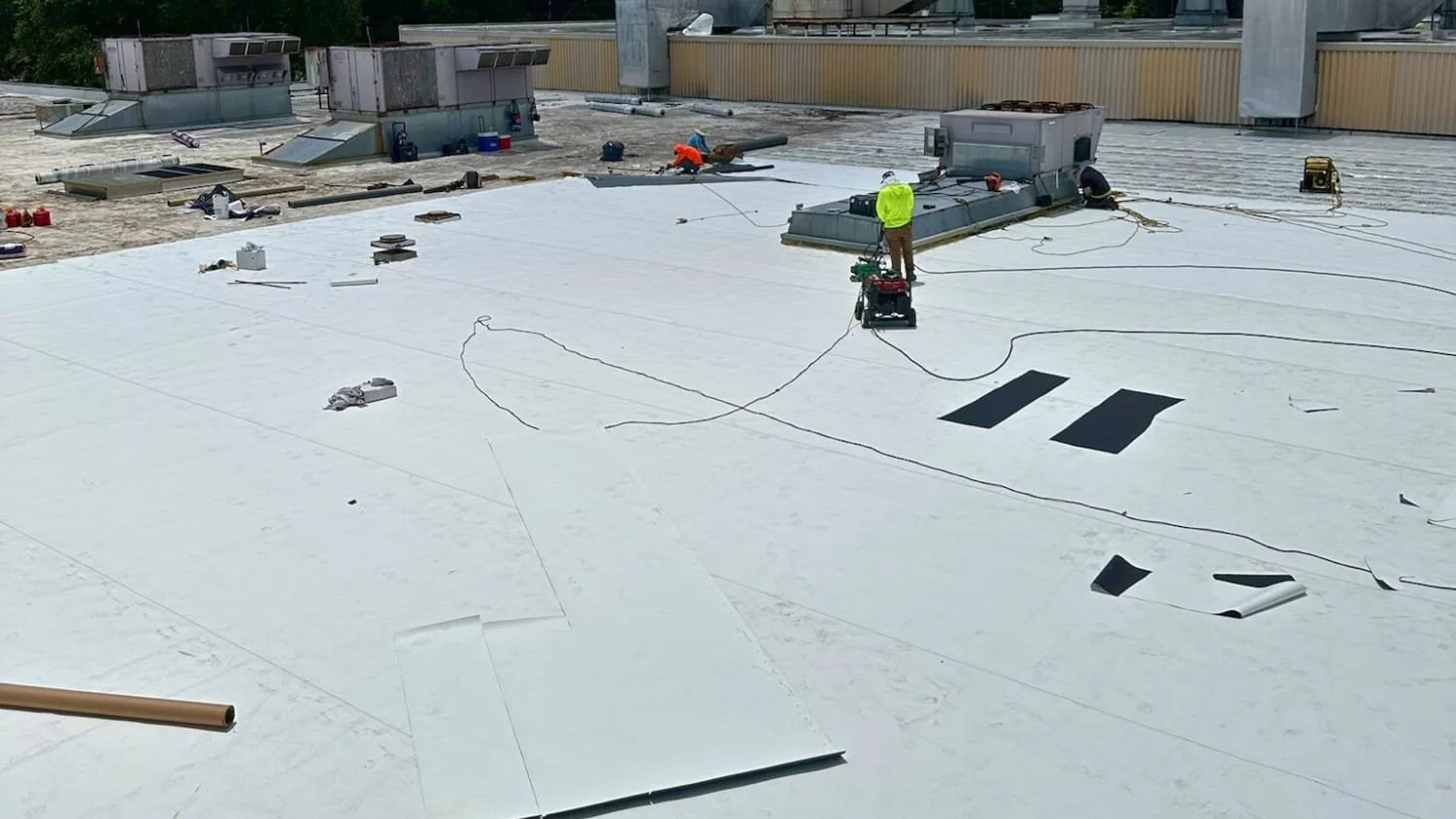
Field review also has to respect what the roof is connected to. Rooftop units, condensate lines, exhaust fans, grease containment, skylights, tenant penetrations, parapet walls, expansion joints, and older repair patches can all change where water travels and where a permanent repair has to land.
Scheduling is part of the technical scope. A roof plan that ignores loading access, tenant entrances, parking, material deliveries, noise, odor, security, and business hours can look acceptable on paper while creating unnecessary disruption once crews arrive. We keep those constraints visible before the work starts.
The roof record also calls out unknowns, because hidden moisture, concealed deck damage, blocked drains, and undocumented prior repairs can change the correct next step.
The closeout record matters after the work is done. We keep notes, photo locations, access constraints, completed repair areas, and remaining risk items connected to the roof area so owners can use the file for follow-up maintenance, budget planning, tenant communication, procurement review, or the next capital cycle.
Event Venue & Convention Center Roofing — ROI & Capital Questions
How do you structure a multi-year re-roofing capital program for a large convention center?
A multi-year program starts with a current condition assessment that scores each roof zone by condition, remaining service life, and warranty status. Zones are then sequenced by priority — highest urgency first, lowest urgency last — with year-by-year cost projections. Each year's scope is sized to fit within the confirmed dark window calendar and the annual capital budget. As each zone is completed, it immediately falls under NDL warranty coverage while the remaining zones continue under the maintenance program.
What is the cost of a roofing-related event cancellation or water damage claim?
A water damage event during an active convention in Akron involves: direct property damage to exhibitor equipment, displays, and materials; business interruption claims from exhibitors who couldn't exhibit; revenue loss from the venue's cancellation of the affected sessions; emergency remediation costs; and reputational damage that affects future bookings. The aggregate cost of a single significant water intrusion event during a convention frequently exceeds the full cost of the re-roofing project that would have prevented it.
How does roof condition affect a convention center's lender covenants?
Commercial real estate loans on convention facility assets typically include maintenance covenant requirements — the owner must maintain the property in good repair as a condition of the loan. Deferred roofing maintenance that results in water damage events, building permit compliance issues, or manufacturer warranty voidance may constitute a covenant violation that triggers lender review. A current, warranted roof system with documented maintenance records keeps the facility in compliance with standard maintenance covenants.
What is the payback period for convention center re-roofing?
The direct payback calculation compares avoided water damage claims, avoided emergency repair costs, reduced energy consumption from improved insulation performance, and insurance premium effects against the re-roofing cost. Most large convention facility re-roofing programs in Akron achieve direct payback within 8-12 years — well within the 20-25 year service life of the new system. When the asset value protection benefit is added to the calculation, the economic case is considerably stronger.
Should we consider a roof restoration coating versus full replacement?
Roof restoration coatings — silicone or acrylic coatings applied over an existing membrane — are appropriate when the existing system has no significant moisture infiltration, the substrate is structurally sound, and the existing membrane is in the last 5-10 years of its service life with no seam or flashing failures. For a large event venue in Akron, we recommend a thermal scan and core sample assessment before making the restoration vs. replacement decision. Coating an existing system with significant moisture infiltration preserves the appearance of the roof while the insulation and deck continue to deteriorate — it's not a cost savings, it's a deferred problem.