
Capital Planning for Commercial Roofs for Akron commercial properties
Field note on capital planning: a credible roof budget does not come from a satellite view. We start with the building, the roof-evidence package, and the realities of Summit County planning, then trace the water paths, curb flashings, old repairs, dock access, tenant exposure, and the parts of the operation that cannot be interrupted.
The owner for a roof capital plan is usually an asset manager who needs it turned into field records, procurement decisions, storm files, and budget action. We write the plan around that reader, because a roof near Canal Park may only offer short weather windows, while one around Bounce Innovation Hub may be governed by truck courts, tenant doors, campus access, medical operations, airport-area traffic, or public access.
Climate belongs in the budget assumptions. National Weather Service Akron-Canton 1991-2020 normals show about 41.57 inches of annual precipitation and roughly 47.2 inches of annual snowfall, and that Northeast Ohio baseline keeps the plan pointed at snow load, freeze-thaw cycling, ice backup, drainage, wet insulation, summer hail, and a controlled dry-in. In practice, winter accumulation, refreeze at drains, hot membrane in July, and spring downpours keep scuppers, edge metal, coping, and curb flashings on the funding list. March normals near 3.0 inches of precipitation and about 7.6 inches of snow shape how we schedule open work near Port Green Industrial Park.
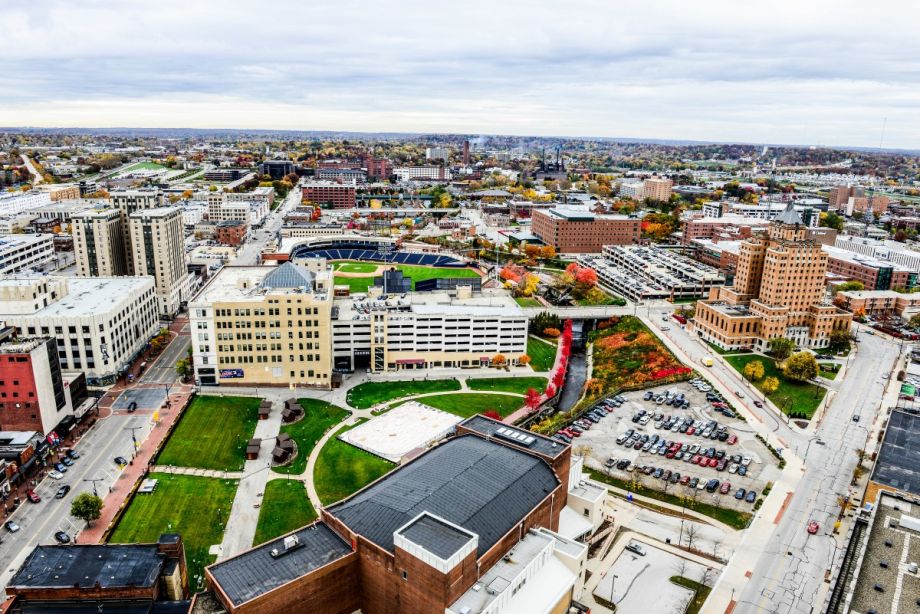
A capital plan has to account for how differently buildings behave. Downtown Akron, the Main-Market Historic District, Cascade Plaza, Highland Square, the University of Akron, Summa Health, Akron Children's Hospital, Cleveland Clinic Akron General, Montrose, Port Green, and the Akron-Canton Airport area each change the roof plan. Near West Market Street a property can move from retail-and-office constraints to medical, campus, warehouse, and industrial traffic within a few miles.
A commercial roof is one of the largest deferred liabilities on a building's balance sheet, and Capital Planning for Commercial Roofs treats it that way. For owners across Akron and the surrounding Summit County market, laying out each roof's condition and projected cost horizon turns an unpredictable repair habit into a funded schedule that survives freeze-thaw cycles and the occasional lake-effect burst without breaking a budget.
Regional access still drives the numbers, running on I-76, I-77, SR-8, I-277, and US-224 and onto East Market Street, West Market Street, Copley Road, and Arlington Road. Near Montrose-Ghent the plan has to anticipate truck access, membrane staging, live rooftop equipment, future tenant work, snow-removal paths, and safe delivery windows.
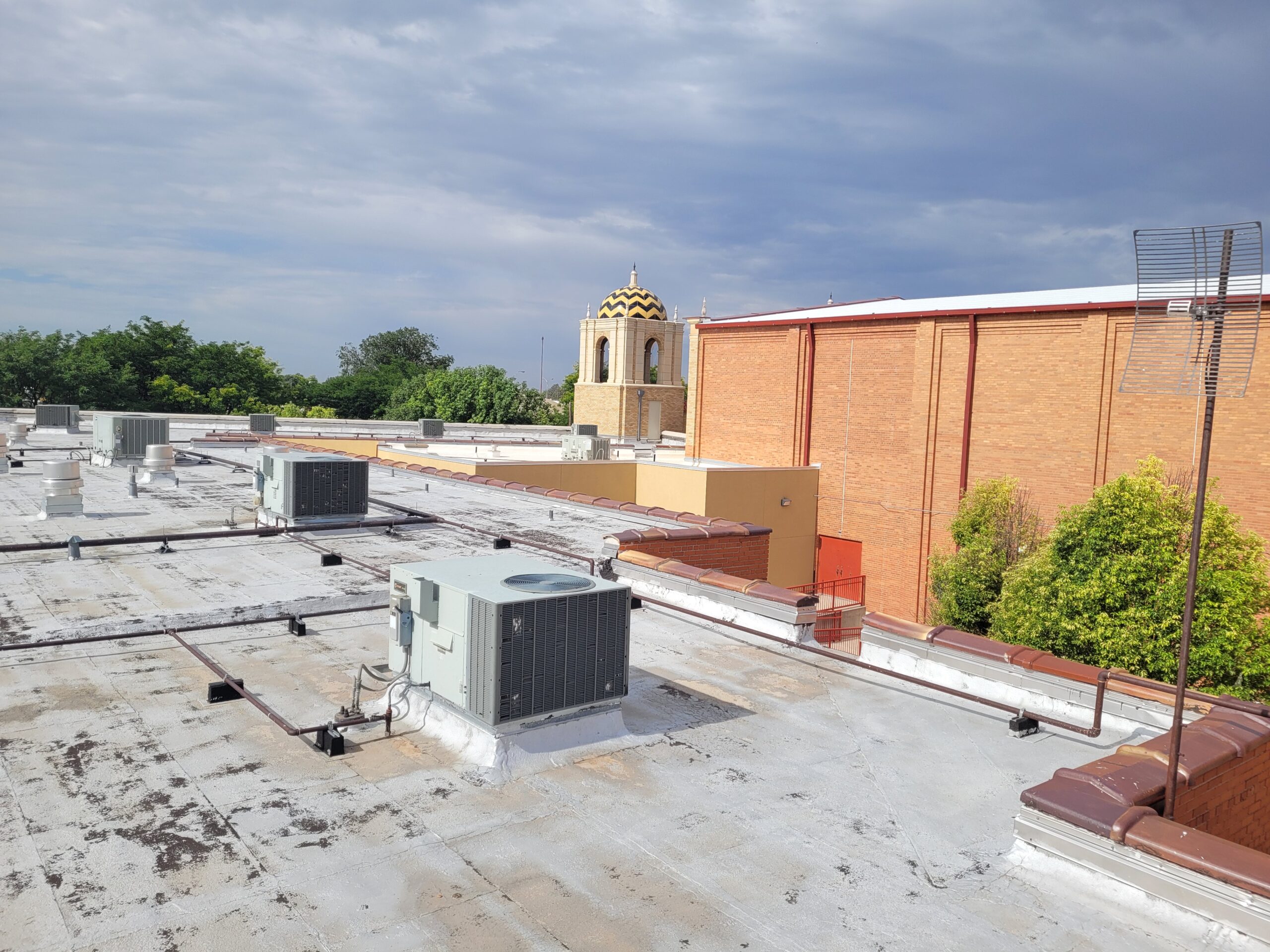
A dependable roof budget comes together section by section rather than as a single guess. The opening pass logs membrane type, age clues, rooftop equipment, ponding lines, drain strainers, edge-metal condition, wall transitions, pitch pockets, grease or chemical exposure, tenant leak reports, snow-drift patterns, and interior ceiling evidence. If a moisture scan or core cut near Norton changes the story underfoot, the budget changes right along with it.
Patching a seam, recovering a deck, coating a membrane, and tearing off for full replacement are distinct budget events, and Capital Planning for Commercial Roofs assigns each its own place rather than lumping them together. A dry roof with a single failed seam is a maintenance line, but a roof with saturated insulation, a damaged deck, or backed-up drains is a replacement reserve, and the plan has to hold those apart to stay honest.
The plan names its cost drivers openly: roof access, fall protection, tear-off volume, wet insulation, tapered insulation, drain work, coping, wall flashing, temporary protection, after-hours labor, wind exposure, and snow handling. Because July mean temperatures run near 73.9 F, hot-weather membrane work factors in too, and we mark it so ownership can see why one section prices differently than another.
Documentation carries weight when the plan touches insurance, public spending, tenant relations, campus operations, healthcare, retail, industrial plants, or capital planning. We include roof-area notes, photo locations, repair limits, known exclusions, access constraints, and weather-sensitive details. On claim-related work we record contractor observations without acting as a public adjuster or promising an insurance outcome.
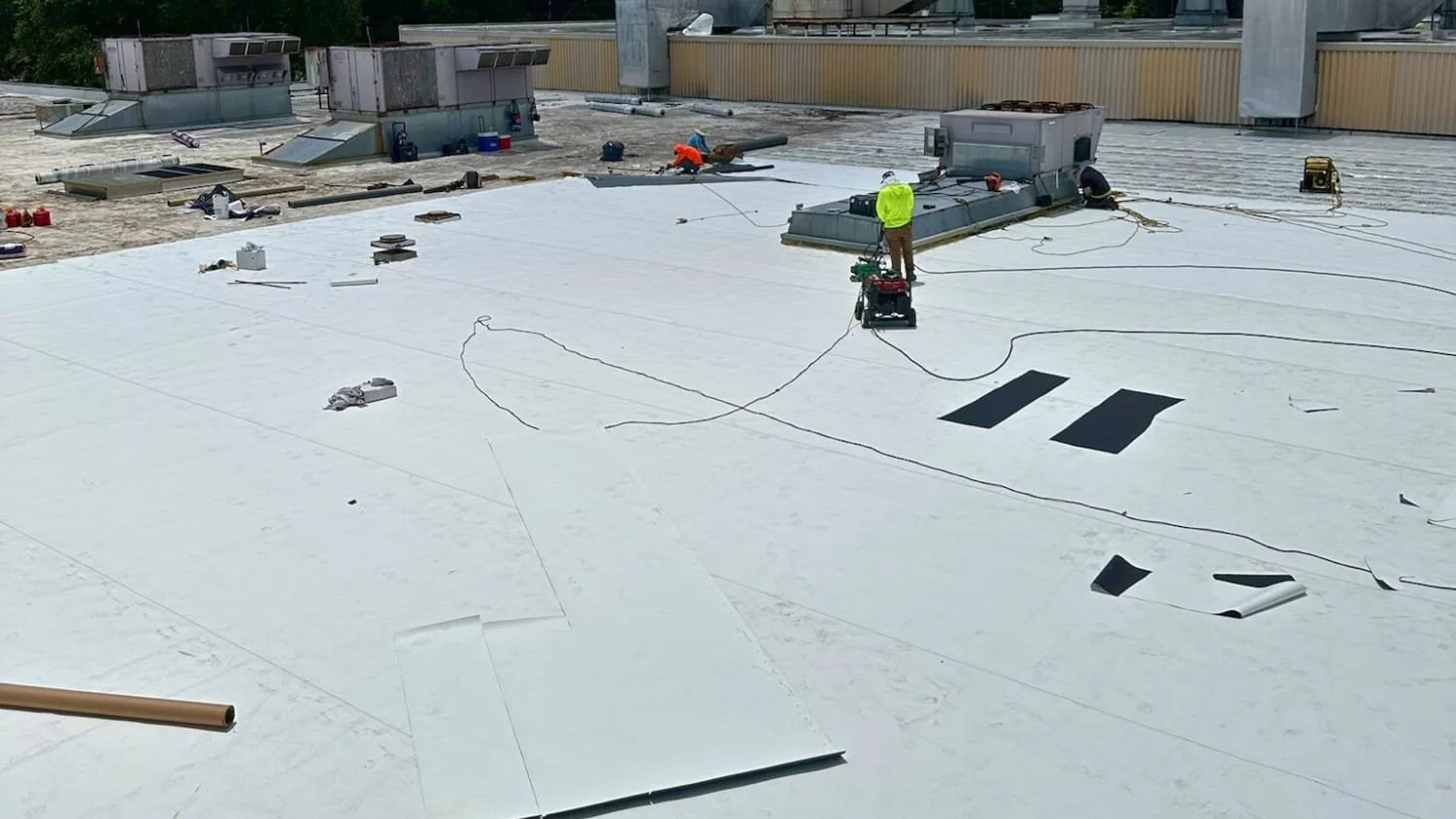
Even a budget item depends on schedule discipline when the work eventually runs. Materials stay clear of drains, open sections are sized to the forecast, and close-in decisions land before winter precipitation, hail, or heavy rain arrives. Where roof-drain capacity is marginal, that matters, because a small open section can become an interior problem before the next dry break.
The best closeout on a capital plan is a record the facility team can use after we leave: what was found, what was fixed, what remains at risk, and what should be budgeted around a hub like Bounce Innovation Hub. That is how we keep the roof file worth reading.
The extra layer every plan should carry: old patch records, roof-traffic history, maintenance logs, warranty paperwork, prior interior leaks, drain paths, freeze-thaw exposure, and access notes that move the cost. That record gives the owner a decision grounded in the real roof, not a square-foot quote with the important assumptions left out.
Questions Owners Ask
What changes the realistic cost for Capital Planning for Commercial Roofs?
The variables that decide where a roof sits in a capital plan are its access, moisture in the insulation, deck condition, edge metal, and drainage performance, not the label on the original spec sheet. Capital Planning for Commercial Roofs confirms those conditions building by building so the reserve numbers reflect the work each roof will genuinely demand.
Can Capital Planning for Commercial Roofs be done while the building stays open?
Frequently, but the work behind a capital plan still has to be sequenced. We review entrances, loading doors, roof access, noise, odor, weather windows, and safety zones so that whatever the plan funds can be executed during the day, in phases, or off-hours without disrupting the building it is meant to protect.
How do we decide between repair, recover, coating, and replacement for Capital Planning for Commercial Roofs?
Capital planning starts from condition: moisture, deck condition, attachment, slope, seam condition, drain performance, winter exposure, and edge-metal risk. Roofs that read dry and stable can be preserved and funded for maintenance in the plan; roofs where moisture is spreading move up the schedule as replacement line items.
What documentation is included after a Capital Planning for Commercial Roofs inspection?
The planning documentation captures roof-area notes, photo locations, leak and damage observations, priority levels, repair limits, access constraints, and budget categories so each roof carries a defensible number into the capital cycle. Any storm damage is logged as contractor-side evidence without promises about claim outcomes.
How quickly can you look at Capital Planning for Commercial Roofs after a winter storm or hail event?
Sequencing within a capital plan depends on access, weather, crew load, and whether water is already entering occupied space. Active leaks are triaged first, and we keep temporary dry-in separate from the permanent repairs the plan ultimately funds.